

In This Article
A smart relay module is a compact, network-connected switch that hides behind your existing wall plate or sits inside your consumer unit. It lets you control lights, heaters, pumps and motors from an app, a voice assistant or an automation rule, while the ordinary wall switch keeps working. Think of it as a tiny, obedient electrician living in your back box.

If you’ve ever wished your house were smarter but couldn’t stomach replacing every switch plate, this is your loophole. A smart relay module is a modern take on the electromechanical relay, the century-old idea that a small signal can flip a much bigger circuit. Today’s versions add Wi-Fi, Zigbee, Matter or Bluetooth, plus optional energy metering, and they’re small enough to vanish behind a standard UK pattress.
That vanishing act is the appeal. Hidden automation means the house behaves cleverly while looking exactly as it did before: same white rockers, same brass-effect plates, same décor. Nobody at the dinner party needs to know your hallway light knows about sunset.
The market is messy, though. Some modules need a neutral wire that plenty of older British homes simply don’t have. Some lean on a Zigbee hub. Others are built as a DIN rail relay for the consumer unit rather than the wall. Existing switch compatibility, meaning whether your current rockers, push-buttons and two-way staircase setups still behave, varies more than the packaging admits.
This guide compares seven real options listed on amazon.co.uk. One honest note first: it is built from manufacturer specifications, independent reviews and aggregated buyer feedback, not from personal bench testing, and I’ll flag where the evidence is thin.
Smart Relay Module Quick Comparison: 7 Picks at a Glance
| Product | Mounting | Connectivity | Neutral needed? | Best For |
|---|---|---|---|---|
| Shelly 1 Gen4 | Behind wall switch | Matter, Zigbee, Wi-Fi, Bluetooth | Yes | Future-proof all-rounder |
| Sonoff ZBMINIL2 | Behind wall switch | Zigbee 3.0 (hub required) | No | Tight back boxes, Zigbee fans |
| Shelly 1L Gen3 | Behind wall switch | Wi-Fi | No | Older homes without a hub |
| SwitchBot Relay Switch 1PM | Behind wall switch | Wi-Fi, Matter, Bluetooth | Yes (AC installs) | Metered single circuits |
| SwitchBot Relay Switch 2PM | Behind wall switch | Wi-Fi, Matter, Bluetooth | Yes (AC installs) | Two lights or one shutter |
| Shelly Pro 2PM | DIN rail | LAN, Wi-Fi, Bluetooth | Yes (panel supply) | Shutters and paired circuits |
| Shelly Pro 4PM | DIN rail | LAN, Wi-Fi, Bluetooth | Yes (panel supply) | Multi-circuit control from one unit |
The table splits neatly into two camps. The first five are wall-box modules for keeping what you’ve got, and the last two are panel-mounted units for a tidier, more centralised install. If your back boxes have no neutral, your shortlist shrinks to Sonoff ZBMINIL2 and Shelly 1L Gen3 straight away, and the only real question left is Zigbee or Wi-Fi.
💬 Just one click — help others make better buying decisions too!😊
Top 7 Smart Relay Module Picks: Expert Analysis
1. Shelly 1 Gen4 — Matter, Zigbee and Wi-Fi in one tiny box
The headline trick is protocol flexibility. The Shelly 1 Gen4 ships in Matter mode, and five presses of its button flip it to a Zigbee profile, with Wi-Fi and Bluetooth still available.
Inside is a 16A potential-free (dry contact) relay. In plain English, the switched circuit is electrically separate from the module’s own power. The same unit can therefore switch a mains lamp, a boiler call-for-heat or a gate controller. Shelly also lists inductive loads with an RC snubber, so fans and fridges are on the menu, which many rivals rule out. It powers from the mains, so expect to need a neutral in the box.
Based on the spec comparison, this is the safest all-rounder for hidden automation when you don’t yet know which smart-home platform you’ll be using in three years. Reviewers of the earlier Shelly 1 line, which this generation descends from, consistently praise its small size and its 16A relay compared with the 10A rating of some Sonoff rivals. The Gen4 has a shorter review history, so treat that sentiment as inherited rather than proven.
Pros:
- ✅ Matter, Zigbee, Wi-Fi and Bluetooth in one unit
- ✅ 16A dry-contact relay handles varied loads
- ✅ Retrofits behind existing switches and sockets
Cons:
- ❌ Needs a neutral wire for power
- ❌ No built-in power metering
Price: roughly £15-£25 at the time of research (check current price). Verdict: excellent value for its flexibility.
2. Sonoff ZBMINIL2 — the tiniest no-neutral Zigbee relay
Size is the party piece: 39.5 × 32 × 18.4 mm, small enough for the shallow, cramped back boxes that defeat bulkier modules. It works without a neutral, supports two-way control, and the Amazon UK listing is clear that a Zigbee hub is required.
That hub requirement is the trade for the local, Wi-Fi-independent control Zigbee gives you. The relay is rated at 6A, so it’s a lighting specialist rather than a heater switch. One independent review notes it needs a load of at least 3W and won’t suit inductive loads such as fans. The same review also noted it doesn’t act as a Zigbee repeater, so check how your mesh is laid out.
For a Zigbee-first Home Assistant household with awkward boxes, it’s hard to beat. Reviewer sentiment is polarised. One UK roundup puts the Amazon average around 4.2 stars from nearly 1,900 ratings, but the latest hundred reviews are more split, and the split looks driven less by hardware than by hub choice, back-box depth and the assumption that Zigbee behaves like Wi-Fi.
Pros:
- ✅ Fits the smallest UK back boxes
- ✅ No neutral wire required
- ✅ Local Zigbee control, even if Wi-Fi drops
Cons:
- ❌ Needs a Zigbee hub to work
- ❌ 6A rating and no inductive loads
Price: broadly at the budget end, under £20 (prices may vary). Verdict: superb value if you already own a hub.
3. Shelly 1L Gen3 — Wi-Fi relay for older, neutral-free homes
Its standout feature is hub-free operation without a neutral. The Shelly 1L Gen3 ships with a bypass, and Wi-Fi with no hub means fewer moving parts in an older house.
The specs come with limits worth reading. It’s rated for up to 200W and controls loads above 5W, so it suits a few LED downlights or a lamp, not a bathroom’s worth of spotlights plus a heater. The bypass is the safety net for LED flicker, a problem UK forum threads on neutral-free wiring mention regularly, often fixed by adding a capacitor or bypass at the fitting. Fitting it in the back box is the sensible first step.
Who is it for? Someone in a 1960s semi with two-core wiring who’d rather avoid a Zigbee hub. One UK comparison site lists it at roughly 4.2 stars from about 110 ratings, which is a small sample, so read it as encouraging rather than conclusive.
Pros:
- ✅ Works without a neutral wire
- ✅ No hub needed, straight onto Wi-Fi
- ✅ Bypass included for flicker-prone LEDs
Cons:
- ❌ 200W maximum load limits multi-lamp circuits
- ❌ Wi-Fi adds another device to your network
Price: around the mid-£20s (check current price). Verdict: fair value for a genuinely tricky retrofit.
4. SwitchBot Relay Switch 1PM — 16A with metering and Matter
The standout is a 16A single-channel relay with power monitoring, Matter and a built-in Bluetooth repeater. Buyers praise how easily it slips into a standard box and how quickly it responds, and the metering is genuinely useful for spotting which appliance is quietly draining your bill, such as a washing machine or dehumidifier.
The caveats are honest ones. Reviewers report the energy data doesn’t carry across to Matter hubs, so full readings live inside the SwitchBot app, and setup needs a SwitchBot account. It has no physical button, no DIN rail option, and only overheating and overcurrent protection, no overvoltage or overpower protection. One buyer found the screw terminals delicate with thicker cable.
So it’s a strong pick for a single metered circuit in a home already using SwitchBot sensors and locks. If you need a wired installation or panel mounting, look at the DIN rail relay options further down.
Pros:
- ✅ 16A load capacity with energy monitoring
- ✅ Matter support and Bluetooth repeater built in
- ✅ Small enough for standard wall boxes
Cons:
- ❌ Power readings don’t reach Matter hubs
- ❌ Lacks overvoltage protection and a manual button
Price: roughly £20-£30 (prices may vary). Verdict: good value if you want metering on one circuit.
5. SwitchBot Relay Switch 2PM — two channels and a Bluetooth safety net
Two independently controlled channels in a 42 × 36 × 16 mm body weighing 27 grams is the hook. It accepts 100-240V AC or 24-30V DC, and the AC install requires a neutral. Each channel is rated at 10A, and it offers both switch and cover modes, so it can drive a pair of lights or a single roller shutter.
Its best trick is resilience: it connects over Wi-Fi with no hub, and if the internet drops you can still use Bluetooth locally. The SmartHomeScene review covered the family in detail and noted SwitchBot’s recent commitment to Home Assistant, which is reassuring for local-control fans.
For a hallway with two separate light circuits, or a single shutter, it consolidates two modules into one. The 2PM’s own review pool is smaller than the older SwitchBot lines, so long-term reliability data is thin.
Pros:
- ✅ Two metered channels in one small module
- ✅ Bluetooth fallback if the internet drops
- ✅ Handles both lights and cover-mode motors
Cons:
- ❌ 10A per channel, below the 16A single-channel models
- ❌ Requires a neutral for AC installs
Price: broadly £20-£35 (check current price). Verdict: strong value per channel.
6. Shelly Pro 2PM — DIN rail relay for shutters and paired circuits
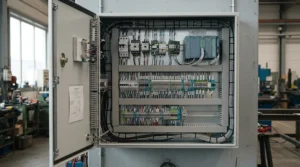
This is the first of our DIN rail relay picks, meaning it clips onto the 35mm rail inside your consumer unit rather than hiding behind a switch. It offers two channels, each with its own power meter, and is suited to roller-shutter and awning control as well as ordinary switching.
The connectivity is where it beats wall modules: LAN, Wi-Fi and Bluetooth, with local control over LAN that doesn’t need the cloud. It also has an embedded web interface and scripting for custom logic, such as closing awnings when the wind picks up. Revised hardware improved thermal design and electrical clearances, which matters when things get warm in a full panel.
It’s aimed at installers and confident smart-home builders, so its consumer review pool on Amazon is smaller and the sentiment I can verify is mostly professional rather than everyday. Given the mains wiring inside the consumer unit, this is an electrician’s job (see the safety section below).
Pros:
- ✅ Wired LAN alongside Wi-Fi and Bluetooth
- ✅ Per-channel metering and shutter control
- ✅ Scripting for genuinely custom automation
Cons:
- ❌ Needs an electrician for the consumer unit
- ❌ Overkill for a single hallway light
Price: roughly £50-£75 (prices may vary). Verdict: fair value where wired reliability matters.
7. Shelly Pro 4PM — the four-channel workhorse
Four independently metered outputs, 16A each, in a single unit is the headline. The Shelly Pro 4PM has a 40A total limit, so you can’t run four maxed-out channels at once, and it sits on the rail with a 1.8-inch colour display for checking loads without opening an app.
It offers LAN, Wi-Fi and Bluetooth, overpower and overvoltage protection, scripting, and low self-consumption. It is single-phase and takes 110-230V AC. One US buyer noted that although it looks like four circuits it must be fed from a single supply, so plan the layout with your electrician rather than assuming every channel can be fed separately. Another questioned the screw terminals under heavy load, so have the terminations torqued and checked by a professional.
Who’s it for? A whole-floor lighting circuit set, garden supplies, or pumps and heaters you want scheduled and metered from one tidy rail-mounted box. One UK retailer lists a 60-month warranty, which is reassuring but worth confirming at purchase.
Pros:
- ✅ Four metered channels from one DIN rail unit
- ✅ Built-in colour screen for at-a-glance checks
- ✅ Overpower and overvoltage protection included
Cons:
- ❌ 40A total cap and single supply feed
- ❌ Highest upfront cost on this list
Price: roughly £90-£140 (check current price). Verdict: strong value per channel for multi-circuit projects.
| Product | Load rating | Metering | Indicative price range | Reviewer sentiment |
|---|---|---|---|---|
| Shelly 1 Gen4 | 16A dry contact | No | £15-£25 | Inherited praise, shorter Gen4 history |
| Sonoff ZBMINIL2 | 6A | No | Under £20 | Polarised, hub-dependent |
| Shelly 1L Gen3 | 200W max | No | Mid-£20s | Generally positive, small sample |
| SwitchBot Relay Switch 1PM | 16A | Yes (app only) | £20-£30 | Positive on size, Matter data gap |
| SwitchBot Relay Switch 2PM | 2 × 10A | Yes | £20-£35 | Smaller review pool |
| Shelly Pro 2PM | Two channels | Yes | £50-£75 | Installer-focused, thin consumer data |
| Shelly Pro 4PM | 4 × 16A, 40A total | Yes | £90-£140 | Feature-rich, terminals questioned |
Looking at the comparison above, Shelly 1 Gen4 offers the widest flexibility for the money, but if you have no neutral, Sonoff ZBMINIL2 and Shelly 1L Gen3 are the only realistic wall-box options. Metering is the dividing line between the budget pair and the metered units, with SwitchBot Relay Switch 1PM the cheapest way in. Buyers who want a DIN rail relay should note that Shelly Pro 4PM sacrifices simplicity and upfront cost for wired reliability.
Practical Installation Guide: Setup, Testing and Your First 30 Days
Most of the value in a smart relay module is unlocked after the wiring. Here’s a workflow that avoids the usual regrets.
Before you touch anything: in the UK, work on fixed wiring is electrical work, so it should be done by a registered electrician or otherwise comply with the rules explained by Electrical Safety First. Isolate at the consumer unit, prove the circuit dead, and photograph the back box before disconnecting anything.
Day one, pairing and naming: pair the module on the bench or with the circuit powered from a safe test arrangement, then name it by room and load (“Landing ceiling”, not “Switch 3”). Set the power-on state, such as “restore last state”, and decide whether the wall switch should directly cut the relay or simply send a signal.
Week one, test the awkward cases: flip the wall switch during an automation, try the two-way staircase, and leave the internet off for an evening. A good install should degrade gracefully. If the light still works from the wall when the router is down, you’ve done it right.
Days 8-30, tune and log: watch for flicker at low brightness, note any dropped connections, and check the signal near metal back boxes. If your module supports metering, spend a fortnight reading the numbers. You’ll probably discover one appliance that deserves a schedule.
The most common first-month error is treating the app as the only control. Keep the physical switch as the master fallback, because your household will forget your app faster than you expect.
Problem → Solution Guide: Fixing the Five Most Common Snags
1. Lights flicker or glow when “off”. This is typical of neutral-free wiring with low-wattage LEDs. Use the supplied bypass (the Shelly 1L Gen3 ships with one) or add one at the fitting, and check the load meets the minimum wattage.
2. The module drops offline. Metal back boxes and thick plaster hurt radio signal. Move your router or hub closer, add a repeater, or choose a wired option such as the LAN-capable Shelly Pro 4PM.
3. The wall switch and the app fight each other. Decide on one logic: either the switch toggles the relay directly, or it acts as a “detached” input that triggers scenes. Be consistent across the house so that guests aren’t left guessing.
4. Two-way staircase lighting stops working. Confirm your model supports it. The Sonoff ZBMINIL2 does, using its two core wires between the switches, according to the Amazon listing. Otherwise, treat it as a job for a specialist.
5. Energy readings don’t appear in your Matter hub. Some buyers report that power data from SwitchBot Relay Switch 1PM stays in the vendor app. Use the app for monitoring, or pick a model with fuller Matter reporting if dashboards matter to you.
Most snags trace back to one of three causes: a wiring assumption, a signal problem or a logic decision. Fix those in that order and the majority of complaints in review sections evaporate.
Real-World Scenarios: Which Smart Relay Module Fits Your Home?
The 1930s semi with no neutrals. A couple with three lighting circuits and no appetite for rewiring should look at Shelly 1L Gen3 for Wi-Fi simplicity or Sonoff ZBMINIL2 if they already run Zigbee. Budget: modest. Frequency: daily.
The new-build with a tidy consumer unit. A family wanting metered heating, garden lighting and pumps controlled centrally suits Shelly Pro 4PM. It costs more upfront, but the per-channel cost is competitive and the LAN connection is dependable.
The renter who can’t change anything visible. A tenant wanting hidden automation should choose Shelly 1 Gen4 or SwitchBot Relay Switch 1PM, checking with the landlord before opening any back box.
Buyer’s decision framework:
- If there’s no neutral and you own a Zigbee hub, choose Sonoff ZBMINIL2 because it’s smallest and cheapest.
- If there’s no neutral and no hub, choose Shelly 1L Gen3 because it’s Wi-Fi and includes a bypass.
- If you want energy monitoring on one circuit, choose SwitchBot Relay Switch 1PM.
- If you want a DIN rail relay for shutters or paired circuits, choose Shelly Pro 2PM.
How to Choose a Smart Relay Module: 7 Steps That Actually Matter
- Check for a neutral first. Open the back box (safely isolated, by a competent person) and look. This one fact removes half the market.
- Match the load. Add up the wattage and note whether it’s resistive, LED or inductive. A 6A lighting relay is not a heater switch.
- Pick your protocol. Zigbee suits a hub-based, local mesh. Wi-Fi is simpler but adds devices to your network. Matter is the compatibility layer that ties the ecosystems together.
- Confirm existing switch compatibility. Rockers, push-buttons and two-way circuits all behave differently, so verify support before buying.
- Measure the back box. A 39.5 mm-long module and a 42 mm one fit differently in a 25mm-deep pattress once cables are in.
- Decide whether you need metering. It’s a nice-to-have on lighting and a genuine money-saver on kettles-adjacent appliances and heaters.
- Choose wall box or consumer unit. A wall module is quick and reversible. A DIN rail relay is tidier and more robust but needs professional installation.
Hidden Automation: Make the House Clever Without Changing How It Looks
The best hidden automation feels like a house with good manners. Landing lights come on softly at night, the towel rail warms before you’re up, and the garden lights obey the calendar rather than a forgotten timer. None of it needs a new switch plate.
The relay approach beats smart bulbs on one crucial point. With a bulb, someone flips the wall switch and the bulb loses power and vanishes from your network, leaving half your automations talking to a light that no longer exists. A relay keeps power flowing to the fitting, so the automation always has something to talk to.
The wrinkle is switch logic. Some modules let you decouple the wall switch so it becomes an input rather than a power cut, which is ideal for scenes. One independent review of the Sonoff ZBMINIL2 flagged the lack of a decouple option as a shortfall, so check the current firmware if you want detached behaviour. Shelly 1 Gen4 and SwitchBot Relay Switch 2PM offer more flexibility here.
Start small: one hallway, one schedule and one sensor. If the household barely notices except that things are better, you’ve achieved hidden automation.
Existing Switch Compatibility: Will Your Current Wall Switches Still Work?
Existing switch compatibility is the make-or-break topic, and product pages tend to gloss over it. Most modules accept standard rocker switches, and many also accept momentary push-buttons. Two-way and intermediate (staircase) setups are where support gets patchy.
The Sonoff ZBMINIL2 supports two-way control with existing external switches, and the SwitchBot Relay Switch 2PM offers switch and cover modes. That covers plenty of layouts, but multi-way circuits with three or more switches usually need an electrician’s assessment.
A few practical rules. Never place a relay behind a dimmer switch, because relays are on/off devices and the combination is asking for trouble. Check the minimum load: the Sonoff ZBMINIL2 needs at least 3W and the Shelly 1L Gen3 needs more than 5W, so a single low-power LED can misbehave. And check the depth of the back box, because a metal box will also dent your wireless signal.
Existing switch compatibility also matters for guests and family. If a module makes the wall switch behave unexpectedly, you’ll hear about it within a day. Test with the least tech-minded person in your house before calling the job finished.

DIN Rail Relay: When the Consumer Unit Beats the Wall Box
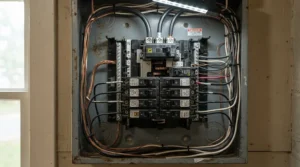
A DIN rail relay clips onto the standard 35mm rail inside your consumer unit or enclosure. Instead of dozens of separate modules scattered around the house, you get a central control point with tidy terminations, often wired Ethernet, and per-channel metering.
The Shelly Pro 2PM and Shelly Pro 4PM are the two options here. Their advantages are clear: LAN alongside Wi-Fi, embedded web interfaces, scripting, and protection features suited to a panel environment. Their disadvantages are equally clear. They need space in the enclosure, a professional install, and a plan for wireless signal if you’re relying on Wi-Fi from inside a metal box, which is why the wired LAN connection is worth using.
For larger loads such as an immersion heater or heavy underfloor heating, ask your electrician whether a contactor is needed rather than switching the load directly through a relay. Treat the per-channel figures as limits, not targets.
The rule of thumb: if you’re building or renovating and can plan the consumer unit, a DIN rail relay is the neater, more reliable long-term route. If you’re retrofitting one light in a rented flat, a wall module wins on effort and cost.
Smart Relay Module vs Smart Switch vs Smart Bulb: Which Route Wins?
| Option | Keeps existing plate? | Works if wall switch flipped? | Install difficulty | Best For |
|---|---|---|---|---|
| Smart relay module | Yes | Yes | Moderate (back box work) | Hidden automation, renters, retrofits |
| Smart switch replacement | No | Yes | Moderate | Fresh look, new builds |
| Smart bulb | Yes | No (bulb loses power) | Very easy | Quick, no-wiring colour effects |
The table shows why the relay route dominates for anyone who wants invisible upgrades. A smart switch replacement, such as the Aqara Smart Wall Switch H1 EU (no neutral version), gives a proper wall-plate replacement with a firm rocker action, but it changes how the wall looks and needs box depth. Smart bulbs are effortless but break whenever someone uses the wall switch.
The relay’s price is a bit of back-box work and some planning. Its reward is a house that behaves the same for everyone else while running smarter behind the scenes.
Common Mistakes When Buying a Smart Relay Module
Buying before checking for a neutral. It’s the number one cause of returns, and the fix is to look first.
Ignoring the minimum load. A single 3W LED on a module that wants more can flicker or refuse to stay off.
Assuming Zigbee is Wi-Fi. A Zigbee module without a hub is a paperweight. Reviews of the Sonoff ZBMINIL2 show how much of the complaint pile is really a hub misunderstanding.
Overlooking data limits. Metering that doesn’t reach your Matter hub, as reported for SwitchBot Relay Switch 1PM, is a design limit, not a fault.
Skipping the professional. Fixed wiring is regulated work in England and Wales, and mistakes here aren’t just annoying, they’re dangerous.
Overspecifying. A four-channel DIN rail unit for one hallway light is a very expensive nightlight.
Buy for the circuit you have, not the smart home in your imagination.
Long-Term Cost, Maintenance and Value
| Product | Indicative price band | Approx. cost per controlled circuit | Value verdict |
|---|---|---|---|
| Shelly 1 Gen4 | £15-£25 | £15-£25 | Excellent |
| Sonoff ZBMINIL2 | Under £20 | Under £20 (plus hub) | Superb with hub |
| Shelly 1L Gen3 | Mid-£20s | Mid-£20s | Fair |
| SwitchBot Relay Switch 1PM | £20-£30 | £20-£30 | Good |
| SwitchBot Relay Switch 2PM | £20-£35 | £10-£18 | Strong |
| Shelly Pro 2PM | £50-£75 | £25-£38 | Fair |
| Shelly Pro 4PM | £90-£140 | £22-£35 | Strong for multi-circuit |
Per circuit, the two-channel SwitchBot Relay Switch 2PM is the value leader, while the budget wall modules win on pure entry price. Don’t forget hidden costs: a Zigbee hub for Sonoff ZBMINIL2, and electrician time for anything at the consumer unit.
Maintenance is light. Check for firmware updates a couple of times a year, re-tighten terminations during any electrical inspection, and note that one retailer lists a 60-month warranty on Shelly Pro 4PM. Metering also pays back in insight, since a fortnight of numbers often reveals a standby culprit worth switching off.
Safety, Regulations and Compliance for UK Installs
In England and Wales, Part P of the Building Regulations covers domestic electrical installation work, and guidance from Electrical Safety First recommends using a registered electrician who can certify the work. The rules have been updated over time, including a 2013 change that reduced the range of notifiable work, so always check current guidance. Scotland operates under its own Building Standards system, and Northern Ireland has no equivalent statutory requirement.
For background on why the rules exist, the government’s own Part P impact assessment explains that electric shock and electrical fires in the home present a real safety risk. Installations should also follow BS 7671, the UK Wiring Regulations.
Practical takeaways: isolate before working, use products with appropriate UKCA or CE marking and suitable for the load, respect load ratings, and don’t swap a relay in for a fuse or protective device. If in doubt, ask a professional. A smart relay module is clever, but it doesn’t replace proper circuit protection.

FAQ
❓ Do I need a neutral wire for a smart relay module?
❓ Will a smart relay module work with two-way staircase lighting?
❓ Is a DIN rail relay worth it over a wall-box module?
❓ Can I fit a smart relay module myself in the UK?
❓ Do smart relay modules work without internet?
Conclusion
A smart relay module is the rare smart-home upgrade that respects your walls, your landlord and your patience. If you’re chasing hidden automation without swapping a single plate, the wall-box options here cover most UK situations: Shelly 1 Gen4 for flexibility, Sonoff ZBMINIL2 for cramped Zigbee installs, Shelly 1L Gen3 for neutral-free Wi-Fi, and SwitchBot Relay Switch 1PM or SwitchBot Relay Switch 2PM when you want metering. If you’re planning a tidy consumer unit, Shelly Pro 2PM and Shelly Pro 4PM bring the DIN rail relay approach to your smart home with wired reliability.
The pattern behind every good choice is simple: check your neutral, match your load, confirm existing switch compatibility, and hand mains work to a professional. Get those four right and the technology fades into the background, which is exactly where a good relay belongs.
Recommended for You
- Smart Light Switch vs Smart Plug: 7 UK Picks Tested (2026)
- In-Wall Smart Switch: 7 Best UK Picks For Every Budget (2026)
- 7kW vs 22kW Home EV Charger: 7 Best Picks Compared (2026)
Disclaimer: This article contains affiliate links. As an Amazon Associate, I earn from qualifying purchases. If you purchase products through these links, we may earn a small commission at no additional cost to you.
✨ Found this helpful? Share it with your friends! 💬🤗
