
In This Article
Somewhere between “just get whatever’s cheapest” and “future-proof everything,” most people buying their first home charger hit a wall of jargon. Kilowatts, phases, amps, tethered versus untethered — it’s a lot to absorb before you’ve even picked a colour. The honest truth is that the 7kW vs 22kW home EV charger question isn’t really about which number sounds more impressive. It’s about what’s physically plugged into your house.
A 7kW charger runs on the single-phase electricity supply that the vast majority of UK homes already have. A 22kW charger needs three-phase power, which is common in commercial units and a small slice of larger or rural properties, but rare on residential streets. That single fact decides the entire debate for most drivers before price, brand, or app quality even come into it.
This guide walks through what each option actually delivers overnight, which real chargers are worth shortlisting, and how to avoid paying for capability your car — or your electricity supply — can’t use. Before you get quotes, it’s worth checking the current home chargepoint grant criteria on GOV.UK, since eligibility and funding rates have shifted more than once in the last year. We’ll cover charging speed in real-world miles, not just spec-sheet numbers, and we’ll be upfront about where 22kW genuinely earns its keep versus where it’s simply expensive overkill.
What Is a 7kW vs 22kW Home EV Charger?
A 7kW home EV charger runs on a standard single-phase electricity supply and typically adds around 25-30 miles of range per hour. A 22kW charger needs a three-phase supply — rare in UK homes — and can theoretically triple that speed, though most cars can’t actually draw the full 22kW through AC charging anyway.
That last point trips up a lot of buyers. On-board AC chargers in the vast majority of electric cars sold in Britain are capped at either 7.4kW or 11kW, meaning a 22kW wallbox often charges no faster than a 7kW one once you plug in a real vehicle. It’s a bit like fitting a Formula 1 fuel hose to a car with a teaspoon-sized filler cap — the extra capacity just sits there unused.
Quick Comparison Table: 7kW vs 22kW at a Glance
| Factor | 7kW Charger | 22kW Charger |
|---|---|---|
| Electrical supply needed | Single-phase (standard UK home) | Three-phase (rare in UK homes) |
| Typical range added per hour | 25-30 miles | Up to 60-90 miles, if the car supports it |
| Compatible with most UK homes | Yes | Usually no, without a costly upgrade |
| Typical full charge time (60kWh battery) | Roughly 8-9 hours | Roughly 3 hours, if the car’s onboard charger allows it |
| Best For | Overnight charging on a standard supply | Multi-EV households or properties that already have three-phase power |
Looking at the table, the practical gap is smaller than the headline numbers suggest. A 7kW charger comfortably tops up a typical EV overnight within a single off-peak window, which covers the vast majority of UK charging patterns. The 22kW option only pulls ahead if your car’s onboard charger can actually accept that much AC power and your property already has three-phase electricity — otherwise you’re paying a premium for a number you’ll never see on the dashboard.
💬 Found this comparison useful? A quick share helps other UK drivers avoid an expensive mistake.
Single-Phase vs Three-Phase Supply: The Real Difference
Here’s the bit that actually decides your shortlist, so it’s worth getting properly clear on it. Electricity arrives at your consumer unit either as a single wire carrying one phase, or as three wires each carrying a phase, staggered so that power delivery is smoother and the total capacity is roughly triple. Most terraced houses, semis, and standard detached homes in Britain run on single-phase power — it’s simply what the network was built around decades before anyone was charging a car in the driveway.
Single-phase household limits typically cap continuous EV charging at 7.4kW (32A), which is exactly why 7kW chargers are the default recommendation for nearly every domestic installation. Pushing past that on a single-phase supply isn’t a software toggle — it requires the local Distribution Network Operator to run a three-phase feed to the property, and that’s rarely a small job. As one detailed comparison notes, upgrading to three-phase power can involve significant installation work and additional cost for homeowners.
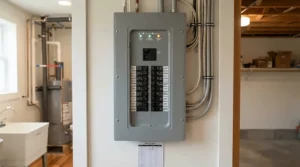
Three-phase supply does exist domestically, mind — usually in large rural properties, converted barns, homes with substantial outbuildings, or anywhere a previous owner ran commercial-grade wiring for a workshop or swimming pool plant room. If you’re not sure which you have, an electrician can check your fuse arrangement in minutes; a three-phase supply typically shows as three separate 100A fuses rather than one. Renovation projects and new-builds occasionally spec three-phase in from the start, which is the one scenario where chasing a 22kW charger genuinely makes sense without a disruptive retrofit.
Top 7 Home EV Chargers: Expert Analysis
Choosing between these two power levels only gets you halfway there — the charger itself matters just as much for day-to-day usability, app quality, and how it plays with your energy tariff. Every product below is a real, currently available unit, covering budget, mid-range, and premium options, with an honest note on which electrical supply each one actually needs.
1. Project EV EVA-07S-SE — best budget pick for straightforward single-phase homes
The EVA-07S-SE strips things back to what most drivers actually need: reliable 7kW charging without a premium price tag attached. Its 7.4kW single-phase output means it slots into a standard UK household supply with no drama, delivering roughly 25-30 miles of range per hour overnight. On paper this is a no-frills unit, and that’s rather the point — you’re not paying for solar diversion or a flashy touchscreen you’ll rarely use.
What most buyers overlook about budget chargers like this one is that the core charging hardware doesn’t differ hugely from pricier rivals; the extra cost elsewhere usually buys smart-tariff integration and app polish rather than raw charging capability. This makes it a sound match for anyone on a fixed off-peak tariff who just wants dependable overnight top-ups without fuss. It’s consistently positioned by UK comparison sites as the budget option in a field of pricier smart chargers.
Pros:
- ✅ Genuinely affordable entry point into home charging
- ✅ Backed by a five-year parts warranty for peace of mind
- ✅ Simple installation on any standard single-phase supply
Cons:
- ❌ Lacks the granular solar-diversion features of premium rivals
- ❌ App and smart-scheduling functionality trail the market leaders
At around £700-£800 before installation, the EVA-07S-SE represents strong value for anyone whose priority is dependable overnight charging rather than smart bells and whistles.

2. Easee One — best for first-time buyers wanting simplicity
Easee built its reputation on making installation and day-to-day use almost embarrassingly easy, and the One lives up to that. Its standout feature is sheer compactness — it’s noticeably smaller than most rivals, which matters if you’re mounting it somewhere tight like a narrow side return or a cluttered garage wall.
The unit delivers 7.4kW on a single-phase supply, translating to a full charge in roughly 6-8 hours for a typical family EV overnight. Where it earns its “beginner-friendly” reputation is the setup process: connectivity runs through Bluetooth and an optional 4G add-on rather than relying solely on a fussy home wifi handshake, which cuts down on the most common first-week frustration owners report. Reviewers consistently frame it as one of the more approachable smart chargers on the market for people who don’t want to spend an evening fighting with router settings.
Pros:
- ✅ Compact housing fits tight or awkward mounting spots
- ✅ Straightforward setup via Bluetooth and optional 4G
- ✅ Comes in a choice of colour finishes to match your home
Cons:
- ❌ Fewer advanced solar-integration options than premium rivals
- ❌ Requires an earth rod on some installations, adding cost
Priced around £900-£1,000 installed, the Easee One is a smart middle-ground pick — a step up from pure budget units without tipping into premium territory.
3. Ohme Home Pro — best for slashing bills on smart tariffs
If your household is on Octopus Intelligent Go, OVO Charge Anytime, or a similar time-of-use tariff, the Ohme Home Pro is arguably the single most financially sensible charger on this list. Its standout feature is direct tariff integration — the unit talks to your supplier’s servers to identify the cheapest overnight window and schedules charging automatically, without you lifting a finger.
Running at 7.4kW on a single-phase supply, it delivers the same raw charging speed as most rivals here, but the difference shows up on your electricity bill rather than the spec sheet. The charger communicates directly with Octopus to determine when electricity is cheapest, often notably below the standard rate, and continues to function on stored schedule data even if the wifi connection drops out. That resilience matters more than it sounds; a charger that silently reverts to peak-rate charging the moment your router hiccups isn’t actually saving you anything.
Pros:
- ✅ Deep integration with major smart EV tariffs
- ✅ Touchscreen interface with clear scheduling controls
- ✅ Keeps working to schedule even if wifi drops out
Cons:
- ❌ Tethered-only, so no untethered cable-free option
- ❌ Native solar diversion is more limited than dedicated solar chargers
At around £800-£900 installed, the Home Pro often pays for the price gap over budget units within the first year or two, purely through smarter off-peak scheduling.
4. Wallbox Pulsar Max — best for a compact design that blends in
Wallbox built its name on chargers that don’t look like they were designed by a committee, and the Pulsar Max continues that streak. Its standout feature is a genuinely small footprint combined with a design language that looks more like a piece of home tech than an industrial fitting bolted to your wall.
It delivers up to 7.4kW on a standard single-phase supply, and the myWallbox app is one of the more polished pieces of software in this category, covering scheduling, usage monitoring, and remote lock/unlock. It supports both tethered and untethered configurations, which makes it a flexible pick for households where aesthetics and everyday usability matter equally. Reviewers regularly flag the app’s clarity as a genuine differentiator rather than marketing fluff, particularly for tracking cost-per-charge over time.
Pros:
- ✅ Compact, discreet design that suits smaller wall spaces
- ✅ Choice of tethered or untethered cable configuration
- ✅ Polished app with clear usage and cost tracking
Cons:
- ❌ No native three-phase option if you later want 22kW
- ❌ Solar-diversion features are less sophisticated than Zappi’s
Expect to pay roughly £750-£850 before installation, positioning the Pulsar Max as a strong mid-range choice for anyone prioritising looks and app quality in equal measure.
5. Myenergi Zappi v2.1 — best for solar panel owners wanting flexibility
The Zappi has become something of a default recommendation for anyone charging alongside solar panels, and its standout feature explains why: genuine solar and wind diversion, routing your own generated power into the car before it ever touches grid electricity. It offers different charging modes, including Eco, Eco+, and Fast, so households can adapt charging around their own energy use patterns rather than following a single fixed schedule.
Crucially, the Zappi is available in both a 7.4kW single-phase version for standard homes and a 22kW three-phase version for the smaller number of properties with that supply already in place — making it one of the few chargers on this list genuinely built to serve both sides of the 7kW vs 22kW divide. What most buyers overlook is that Eco+ mode only draws pure surplus solar, meaning charging pauses the instant a cloud rolls over, which is ideal for maximising self-consumption but not something to rely on for guaranteed overnight completion.
Pros:
- ✅ Genuine solar and wind diversion, not just marketing language
- ✅ Available in both single-phase 7kW and three-phase 22kW versions
- ✅ Multiple charging modes suit different household energy habits
Cons:
- ❌ Premium pricing compared with non-solar rivals
- ❌ Eco+ mode charging speed is weather-dependent and inconsistent
Pricing typically sits around £1,000-£1,100 installed for the single-phase version, climbing higher for the three-phase 22kW variant plus any supply upgrade required.
6. Andersen A2 / Quartz — best for design-conscious premium buyers
Few chargers get discussed in terms of interior design, but the Andersen range consistently does. Its standout feature is a genuinely striking, almost furniture-like enclosure available in a wide choice of finishes, with the charging cable and connector tucked neatly out of sight when not in use.
The unit is available with a maximum charging speed of 7kW on single-phase supplies or 22kW where a three-phase electrical supply is present, giving buyers genuine flexibility if they’re renovating and considering a supply upgrade alongside the charger itself. The trade-off for that design pedigree is cost — this is comfortably one of the pricier options here, and the aesthetics-first approach won’t matter to everyone. Still, for a driveway or car port that’s clearly visible from the street, the visual difference compared with a standard industrial-looking wallbox is hard to ignore.
Pros:
- ✅ Distinctive, design-led enclosure with multiple colour options
- ✅ Cable and connector store neatly inside the unit
- ✅ Available in both 7kW single-phase and 22kW three-phase builds
Cons:
- ❌ Among the most expensive options in this roundup
- ❌ Premium design doesn’t translate into faster real-world charging for most cars
Fully installed pricing typically runs from around £1,100 up to £1,600 or more depending on model and phase, making it a considered purchase rather than an impulse buy.
7. Wallbox Commander 2 — best true 22kW option for three-phase properties
Where most “22kW-capable” domestic chargers are really 7kW units with an optional three-phase variant bolted on, the Commander 2 is built from the ground up for higher-demand environments — think large rural properties, multi-EV households, or anyone who already has genuine three-phase power and wants to use every bit of it. It delivers up to 22kW on three-phase or 7.4kW on single-phase supplies, with a 7-inch touchscreen and support for RFID, PIN, or app-based access control, features more commonly associated with semi-commercial installations than a typical driveway.
That commercial DNA is exactly why it belongs on a shortlist here rather than a dedicated fleet-charging guide: it’s a legitimate, purchasable domestic option for the specific household that actually has three-phase power and multiple EVs to keep topped up. Power-sharing functionality lets two or more chargers on the same circuit automatically split available capacity, which matters enormously for a two-EV garage where both cars need to charge without tripping the main fuse.
Pros:
- ✅ Genuine 22kW output for properties with real three-phase supply
- ✅ Smart power-sharing across multiple chargers on one circuit
- ✅ Touchscreen access control suited to multi-user households
Cons:
- ❌ Overkill, and needlessly expensive, for a standard single-phase home
- ❌ Higher purchase price than any single-phase-only unit here
Expect a premium price tag, typically upwards of £1,200 before installation, reflecting hardware built for genuinely higher-demand use rather than the average driveway.
Top 7 Chargers: Specs & Value Comparison
| Charger | Max Speed | Supply Needed | Price Range | Best For |
|---|---|---|---|---|
| Project EV EVA-07S-SE | 7.4kW | Single-phase | Around £700-£800 | Budget-focused overnight charging |
| Easee One | 7.4kW | Single-phase | Around £900-£1,000 | First-time buyers wanting simplicity |
| Ohme Home Pro | 7.4kW | Single-phase | Around £800-£900 | Smart-tariff households |
| Wallbox Pulsar Max | 7.4kW | Single-phase | Around £750-£850 | Compact, design-conscious mid-range |
| Myenergi Zappi v2.1 | 7.4kW / 22kW | Single or three-phase | Around £1,000-£1,100+ | Solar panel owners |
| Andersen A2 / Quartz | 7kW / 22kW | Single or three-phase | Around £1,100-£1,600 | Design-led premium buyers |
| Wallbox Commander 2 | 22kW | Three-phase | From around £1,200+ | Multi-EV, true three-phase homes |
The pattern across this table tells its own story: every genuinely budget-friendly option here tops out at 7.4kW on single-phase, because that’s what the overwhelming majority of UK homes can actually support. The 22kW-capable units — Myenergi Zappi v2.1, Andersen A2 / Quartz, and Wallbox Commander 2 — all carry a noticeable premium, and two of them still ship in a 7kW single-phase configuration as their default domestic setup. Unless you’ve confirmed a three-phase supply already exists at your property, that premium buys flexibility you may never use.
Benefits vs Traditional Alternatives
| Charging Method | Typical Speed | Overnight Suitability | Running Cost Control |
|---|---|---|---|
| Standard 3-pin plug | Around 2.3kW | Poor — 20+ hours for a full charge | Minimal (no smart scheduling) |
| 7kW home charger | 7.4kW | Excellent for almost all EVs overnight | Strong, especially with tariff integration |
| 22kW home charger | Up to 22kW (supply-dependent) | Excellent, if car and supply both support it | Strong, but higher upfront cost |
| Public rapid charger | 50kW+ | Not designed for overnight home use | Weak — pay-as-you-go pricing |
Compared with a standard 3-pin plug, both dedicated wallboxes represent a huge practical upgrade — a 3-pin socket simply wasn’t designed for sustained high-load overnight use and takes the best part of a day to fill a typical battery. Against public rapid charging, home charging on either 7kW or 22kW wins comfortably on cost per mile, since you’re paying domestic electricity rates rather than premium pay-as-you-go pricing. The genuine decision point remains what it was at the start: whether your property’s electrical supply and your car’s onboard charger can actually make use of anything beyond 7kW.
How to Choose Between a 7kW and 22kW Charger
- Check your electrical supply first. Ask an electrician to confirm whether your property has single-phase or three-phase power before you fall in love with any specific charger.
- Check your car’s onboard AC charging limit. Many EVs cap out at 7.4kW or 11kW regardless of what the wallbox can theoretically deliver, so a 22kW unit may add nothing.
- Work out your realistic overnight window. If you plug in around 11pm and drive off at 7am, that’s eight hours — comfortably enough for a full 7kW charge on most batteries.
- Factor in the cost of a supply upgrade. Moving from single to three-phase can involve substantial groundworks, so weigh that against how often you’d actually need the extra charging speed.
- Consider your household’s EV count. A two-EV driveway sharing one circuit is where 22kW and power-sharing features genuinely start to earn their cost.
- Check current grant eligibility. Funding rules for renters, flat owners, and landlords have changed more than once recently, so verify your situation on the official GOV.UK grant guidance before committing.
- Match the charger to your tariff, not just your car. If you’re on a smart time-of-use tariff, a charger with native integration often saves more money than raw charging speed ever will.
Charging Speed in the Real World: What to Expect
Spec sheets talk in kilowatts; your daily life runs on miles and minutes, so it’s worth translating one into the other. A 7kW charger typically adds somewhere between 25 and 30 miles of range per hour, which means an EV that arrives home with 40% charge and a 60kWh battery will comfortably top up to full overnight within a standard eight-hour window. That’s not a marginal result — it’s genuinely more charging speed than most households will ever need on a day-to-day basis.
A 22kW charger, on cars that can actually accept it, roughly doubles or triples that rate. But here’s what the spec sheet won’t tell you: the number of EVs on UK roads with an onboard AC charger rated above 11kW remains small, and plenty of mainstream models cap out at 7.4kW regardless of what’s feeding them. Plug a car limited to single-phase acceptance into a 22kW three-phase charger and you’ll still only draw 7kW — the extra capacity simply isn’t usable by that vehicle. The practical upshot is that for the average single-EV household, real-world charging speed differences between a good 7kW charger and an expensive 22kW one are often close to zero.
Practical Installation & Setup Guide
Getting a charger fitted and configured properly in the first month makes a genuine difference to how much you actually save, so a bit of upfront planning pays off. Start by confirming with your installer whether your consumer unit needs any upgrading — older properties occasionally need a fuse or cut-out amendment before a 7kW charger can even be fitted safely, and this is worth asking about at the quote stage rather than discovering on installation day.
Once the unit is live, resist the temptation to leave every setting on default. Spend the first evening actually opening the app and setting a charging schedule that matches your specific electricity tariff’s cheap window — a surprising number of new owners skip this step and end up paying peak rates for months. If your charger supports load balancing or solar diversion, test it deliberately during daylight hours in week one so you understand how it behaves before relying on it. Finally, a common early mistake is charging to 100% every single night out of habit; for daily driving, charging to around 80% is gentler on battery longevity and still leaves ample range for all but the longest journeys.
Real-World Scenarios: Which Charger Fits Your Household
The commuter couple, semi-detached house, single EV: Driving roughly 30 miles a day and charging overnight on a standard single-phase supply, this household needs nothing beyond a 7kW charger with basic tariff scheduling. A Project EV EVA-07S-SE or Ohme Home Pro comfortably covers their needs without any wasted spend.
The solar-panel family, detached house, one EV plus a hybrid: With rooftop solar already generating daytime power, this household benefits enormously from genuine solar diversion rather than raw charging speed. The Myenergi Zappi v2.1 in its single-phase 7kW configuration lets them route their own generation into the car for free, cutting grid reliance without needing three-phase power at all.
The rural property with two EVs and existing three-phase supply: Here, and really only here, does 22kW start to justify itself. A Wallbox Commander 2, with its power-sharing between two vehicles on one circuit, avoids the awkward reality of two separate 7kW chargers fighting for the same fuse capacity.
Common Mistakes When Buying a Home EV Charger
Buying based on the biggest number rather than what your car and supply can actually use is easily the most expensive mistake in this category — paying for 22kW capability your property can’t deliver is money spent on a specification you’ll never experience. Close behind that is skipping the DNO notification step; installers generally handle this, but assuming it’s automatic rather than confirming it’s been done can cause delays or, in rare cases, safety issues on the local network.
Another recurring pitfall is choosing tethered-only when your household might switch EV brands or connector types down the line — an untethered socket offers more long-term flexibility. Finally, plenty of buyers overlook smart-tariff compatibility entirely, picking a charger on looks alone and then missing out on genuine year-on-year savings that a tariff-integrated model would have delivered automatically.
7kW vs 22kW for Different Drivers and Vehicles
For the average single-EV commuter household, this comparison resolves quickly: a 7kW charger on a standard single-phase supply meets essentially all realistic overnight charging speed needs, and upgrading beyond that delivers no measurable day-to-day benefit. For families running two electric vehicles from one property, the calculation shifts — a genuine three-phase 22kW installation with power-sharing, like the Wallbox Commander 2, avoids the friction of two cars competing for one 7kW circuit.
Company car drivers or anyone regularly covering high daily mileage may notice more benefit from faster charging, provided their specific vehicle’s onboard charger can accept above 7.4kW — worth checking the manufacturer’s spec sheet rather than assuming. Meanwhile, anyone in a flat, terraced house, or standard semi should treat 22kW as effectively off the table unless a full three-phase supply upgrade is already planned as part of a wider renovation.
Long-Term Cost & Maintenance
Running costs matter more over a charger’s lifetime than the purchase price ever will, and this is where smart-tariff integration earns its keep. A household charging consistently on a cheap overnight rate rather than a flat standard tariff can see meaningfully lower annual electricity spend purely from timing — no faster charging speed required. Maintenance itself is refreshingly low across this category: most wallboxes need nothing beyond an occasional visual check and, per manufacturer guidance, a periodic electrical inspection alongside your home’s regular safety checks.
Total cost of ownership tips firmly in favour of 7kW units for standard homes once you factor in the potential three-phase supply upgrade a 22kW installation might require — a cost that can run into thousands of pounds depending on how far the DNO’s network needs extending to your property. For households that already have three-phase power, that calculation naturally flips, since the supply cost has already been absorbed.
Safety, Regulations & DNO Compliance Guide
Every home EV charger installation in the UK needs to be notified to, or in some cases pre-approved by, your local Distribution Network Operator, because a charger draws considerably more sustained power than typical household appliances. According to UK Power Networks, the easiest way to check whether a property already has three-phase power is to look at the electrical fuse arrangement — a single-phase supply has one fuse, while three-phase has three separate 100-amp fuses. A qualified, Part P-registered installer will handle this notification as a standard part of any professional installation, so it’s worth confirming it’s included in your quote rather than assumed.
Modern chargers also include PEN fault protection as standard, continuously monitoring supply voltage and automatically isolating the unit if a fault is detected on the street network — a genuine safety advance over the earth-rod requirements older installations sometimes needed. For a deeper technical breakdown of when three-phase upgrades are worth pursuing, Motoring Electric’s guide to single and three-phase supply is a useful independent reference alongside whatever your installer recommends.
Problem → Solution: Common Charging Headaches Solved
Problem: My charger keeps charging at full peak-rate electricity instead of the cheap overnight window. Solution: check that the app schedule matches your actual tariff hours exactly, including any daylight-saving shift, since a surprising number of “always charging at the wrong time” complaints trace back to an unadjusted schedule.
Problem: I’ve been quoted for a three-phase upgrade I didn’t expect. Solution: confirm with your installer whether a standard 7kW single-phase charger would meet your needs first — for most single-EV households, it will, and it avoids the upgrade cost entirely.
Problem: My app keeps losing connection to the charger. Solution: chargers relying purely on home wifi can be more prone to dropouts than units offering Bluetooth or 4G as a backup, so this is worth checking at the buying stage if connectivity issues would be a dealbreaker.
Problem: I want two EVs to charge from one property without tripping the supply. Solution: look specifically for a charger with genuine power-sharing across multiple units, such as the Wallbox Commander 2, rather than running two independent 7kW chargers on the same circuit.
Frequently Asked Questions
❓ Can I install a 22kW charger without three-phase electricity?
❓ Is a 7kW charger fast enough for daily use?
❓ How much does it cost to upgrade to a three-phase supply?
❓ Do I need permission from my electricity network to install a home charger?
❓ Will a 22kW charger damage my car if it can't accept that much power?
Conclusion
Strip away the marketing and the 7kW vs 22kW home EV charger question comes down to one unglamorous fact: what’s already wired into your house. For the overwhelming majority of UK homes running a standard single-phase supply, a well-specified 7kW charger like the Ohme Home Pro or Myenergi Zappi v2.1 delivers everything a typical EV needs overnight, with smart-tariff integration doing far more for your running costs than raw charging speed ever will.
Three-phase 22kW options like the Wallbox Commander 2 and Andersen A2 / Quartz earn their place for a genuinely different audience — properties that already have three-phase power, or households juggling more than one EV from a single driveway. Outside that scenario, the extra cost buys a number on a spec sheet rather than a noticeable change in your morning range. Check your supply, check your car’s actual charging limit, and let those two facts — not the biggest kW figure available — make the decision for you.
Recommended for You
- Smart EV Charger For Solar Diversion: 7 Best UK Picks (2026)
- Portable EV Charger Cable: 7 Best Picks for UK Drivers (2026)
- Type 2 EV Charging Cable: 7 Best Picks for UK Drivers (2026)
Disclaimer: This article contains affiliate links. As an Amazon Associate, I earn from qualifying purchases. If you purchase products through these links, we may earn a small commission at no additional cost to you.
✨ Found this helpful? Share it with your friends! 💬🤗
