
In This Article
There’s a particular kind of smugness that comes from watching your car charge for free while your neighbour queues at a petrol station. That’s the promise behind a smart EV charger for solar diversion — a wallbox clever enough to notice when your panels are pumping out more electricity than your kettle, telly and fridge can use, and to quietly siphon that surplus straight into your car instead of shipping it back to the grid for pennies. It sounds almost too tidy. In practice, it mostly is, provided you buy the right box.
Not every “solar compatible” charger behaves the same way, though, and that’s where a lot of buyers come unstuck. Some units genuinely charge on sunshine alone; others merely top up a token amount of solar before quietly falling back on grid power, functioning as glorified timers with a green sticker. This guide walks through seven real, currently available UK chargers, all researched against genuine specifications and aggregated review sentiment, so you can work out which one actually earns its keep on your driveway. We’ll cover solar excess diversion in proper detail, unpack self-consumption optimisation as a concept worth understanding before you buy, and get specific about what eco charging mode really means on each unit — because the marketing copy and the lived reality don’t always match.
What is a smart EV charger for solar diversion? It’s a home charging point that uses a current sensor (typically a CT clamp) to measure how much electricity your solar panels are generating versus how much your home is using, then automatically adjusts — or entirely limits — how much power it sends to your car so that surplus solar gets used rather than exported. The best examples do this in near real time, tracking cloud cover second by second.
Quick Comparison Table
Before the deep dive, here’s the shape of the market at a glance.
| Charger | Solar Mode Type | Speed | Warranty | Best For |
|---|---|---|---|---|
| myenergi Zappi | Surplus-only (Eco+) | 7.4kW / 22kW | 3 years | Maximum solar self-consumption |
| Ohme Home Pro | Solar-boost (supplements grid) | 7.4kW | 3 years | Smart tariff drivers with solar as a bonus |
| Hypervolt Home 3 Pro | 3 solar modes | 7.4kW | 3 yrs (ext. 5) | All-round design and build quality |
| Wallbox Pulsar Max | Optional (extra hardware needed) | 7.4kW / 22kW | 5 years | Compact installs, long warranty |
| Andersen A3 | App-controlled, included | 7.4kW | 7 years | Kerb appeal and premium finish |
| EO Mini Pro 3 | CT clamp included as standard | 7.2kW / 22kW | 3 years | Tightest wall space |
| Pod Point Solo 3S | App-based solar modes | 7.4kW | 5 years | Budget-conscious, warranty-first buyers |
A few things jump out here. Only the myenergi Zappi runs a genuine surplus-only mode that pauses charging entirely rather than blending in grid power, which matters enormously if your goal is squeezing every last watt of self-generated electricity into the car. The Wallbox Pulsar Max and Andersen A3, meanwhile, both handle solar competently but ask you to think about extra hardware or app configuration rather than delivering it as a one-box, out-of-the-tin solution. Warranty length varies more than you’d expect for what is fundamentally the same job — from three years up to Andersen’s chart-topping seven.
Ready to compare your options properly? Scroll down for the full breakdown of each charger below.
Top 7 Smart EV Chargers for Solar Diversion: Expert Analysis
1. myenergi Zappi — the solar-only specialist
The standout feature here is Eco+ mode, which is worth understanding properly before anything else: rather than blending grid electricity with solar, the myenergi Zappi waits until your panels are generating a genuine surplus and only then starts pushing power to the car, pausing again the moment a cloud rolls over.
Specs worth knowing: 7.4kW on a single-phase supply, with a 22kW three-phase option for larger properties, and three distinct modes (Fast, Eco, Eco+) selectable from the unit or the myenergi app. The charger uses a CT clamp on the incoming supply to monitor generation and consumption in real time, shifting the charge rate as conditions change. In practice, that means the difference between the Zappi and a “solar compatible” rival isn’t a spec sheet number — it’s the granularity of that real-time adjustment.
Who it’s for: households where maximising the proportion of solar-charged miles is the entire point of buying the thing, not a nice-to-have bolted onto a smart-tariff charger. Based on the spec comparison against rivals, nobody else on this list matches its dedicated three-mode solar logic. Reviewers consistently note that the trade-off is a shorter-than-average warranty and a functional-rather-than-beautiful app — myenergi built this for people who care about the diversion, not the design.
Pros:
- ✅ Genuine surplus-only Eco+ mode, not just a solar top-up
- ✅ UK-designed and manufactured, with a mature installer network
- ✅ Built-in PEN fault detection, which can shave installation cost
Cons:
- ❌ Three-year warranty is shorter than several rivals on this list
- ❌ App interface is functional rather than polished
Price range: the unit typically sits in the low-to-mid hundreds, with fully installed costs commonly landing around £950–£1,200 depending on cable run and fuse-board work. Given how precisely it chases surplus solar, this is the charger to check current price on first if solar self-consumption is your one non-negotiable requirement.
2. Ohme Home Pro — the smart-tariff specialist with solar as a bonus
The standout feature is tariff intelligence: the Ohme Home Pro reads live pricing data from suppliers such as Octopus and books the cheapest charging slots automatically, no manual scheduling required.
Key specs with real-world meaning: 7.4kW single-phase charging through a tethered 5-metre Type 2 cable, a built-in colour LCD screen, and — unusually for this category — a 4G SIM rather than reliance on home Wi-Fi, which keeps it working even where broadband signal at the charge point is patchy. Solar handling works via a CT clamp too, but it’s worth being precise about what it actually does: it supplements your solar output rather than charging exclusively from it, so if your panels are generating 0.72kW the charger tops this up with 0.72kW of grid electricity to reach the 1.44kW minimum required to start a session.
Who it’s for: drivers on Octopus Intelligent Go, Agile, or a similar time-of-use tariff who want solar handled competently as a secondary feature rather than the headline act. What most buyers overlook about this model is that its solar logic genuinely is secondary — reviewers repeatedly frame it as “solar-boost” rather than “solar-first,” and that’s an honest description rather than a criticism, provided you know that going in.
Pros:
- ✅ Best-in-class live tariff integration, especially on Octopus
- ✅ 4G connectivity removes any dependence on home Wi-Fi
- ✅ Compact unit, roughly the size of a hardback book
Cons:
- ❌ Solar mode blends grid power rather than charging on surplus alone
- ❌ Tethered-only, so no untethered version if you’d prefer bringing your own cable
Price range: expect the unit alone to sit in the mid hundreds, with a fully installed package commonly quoted around £930–£1,050. If a smart tariff is already central to your household’s electricity strategy and solar is a welcome extra rather than the whole point, this is worth checking current price on.
3. Hypervolt Home 3 Pro — the design-led all-rounder
The standout feature is a genuinely three-tier solar system — Boost, Eco and Super Eco modes — wrapped in one of the toughest, best-looking enclosures in this category.
Key specs with real-world meaning: 7.4kW single-phase charging, IP66 weatherproofing (fully sealed against dust and jets of water) and an IK10 impact rating, meaning the polycarbonate casing shrugs off a 20-joule knock without cracking — genuinely useful if the unit lives somewhere a wheelie bin or bike pedal might clip it. The Home 3 Pro competes directly with the Zappi and Ohme Home Pro, differentiating itself on build quality, solar flexibility and native smart tariff integration without needing extra hardware or subscriptions.
Who it’s for: households who want strong solar handling but refuse to compromise on design or durability to get it — this is the pick for anyone whose charger will be visible from the street and who cares about that. Here’s what to weigh: the Super Eco mode leans closer to the Zappi‘s surplus-first philosophy than Ohme’s blended approach, so if you’re torn between the two specialists, the Hypervolt Home 3 Pro is a credible middle path.
Pros:
- ✅ Three distinct solar modes, including a surplus-priority option
- ✅ IP66/IK10 rating, among the toughest enclosures on the market
- ✅ UK-designed and built, with a cable-wrap design that tidies the install
Cons:
- ❌ Among the pricier options once fully installed
- ❌ Battery-storage integration was still rolling out at the time of writing
Price range: typically £1,025–£1,300 fully installed depending on cable length chosen (5m, 7.5m or 10m options exist). Worth checking current price on if you want the closest thing to a one-box solution that nails solar, tariffs and kerb appeal simultaneously.
4. Wallbox Pulsar Max — the compact specialist
The standout feature is sheer size: at roughly 198 x 201 x 99mm, the Wallbox Pulsar Max is barely bigger than a hardback novel, making it the charger to consider when wall space is tight or the install has to squeeze onto a pillar.
Key specs with real-world meaning: 7.4kW single-phase as standard, with a 22kW three-phase variant for properties with the supply to match, backed by a five-year warranty that’s second only to Andersen’s on this list. The catch, and it’s an important one: solar integration through Wallbox’s Eco-Smart technology requires a separate Wallbox Power Meter, bought as an add-on rather than included in the box.
Who it’s for: buyers who value compactness, a long warranty and IK10 toughness, and who are comfortable factoring in a small additional hardware purchase to unlock solar diversion. Reviewers consistently note that without the extra meter, the Pulsar Max is simply a very good standard smart charger — the solar capability is real, but it isn’t automatically in the box the way it is with several rivals here.
Pros:
- ✅ One of the smallest tethered chargers available in the UK
- ✅ Five-year warranty, well above the category average
- ✅ IK10 impact resistance, useful for busy driveways or garages
Cons:
- ❌ Solar diversion needs a separate Power Meter purchased on top
- ❌ No native support for Octopus Agile’s half-hourly pricing
Price range: the unit typically costs several hundred pounds, with a fully installed total commonly around £900–£1,100 before any additional solar hardware. Check current price on both the charger and the Power Meter together if solar is part of your plan.
5. Andersen A3 — the premium design statement
The standout feature is the hidden cable system: the Type 2 cable retracts entirely inside the unit, leaving a clean, gadget-free face on the wall — a genuine first among the chargers covered here.
Key specs with real-world meaning: 7.4kW single-phase only (there’s no three-phase variant), available across 247 colour and finish combinations including real Accoya wood options, and backed by a seven-year warranty, the longest on this list by some margin. Owners can adjust how much grid energy they want to draw during a charging session using a slider in the app, and can schedule sessions that combine off-peak electricity with any excess solar being generated.
Who it’s for: anyone installing a charger somewhere it’ll actually be seen — a period property, a considered front elevation — where a generic plastic box would be a genuine aesthetic compromise. What the spec sheet won’t tell you, but reviewers note, is that the smart-tariff library is narrower than Ohme’s, and there’s no 4G fallback, so a shaky Wi-Fi signal at the install point is more of a problem here than elsewhere on this list.
Pros:
- ✅ Market-leading seven-year warranty
- ✅ Hidden cable storage keeps the wall genuinely tidy
- ✅ Solar compatibility included at no extra cost
Cons:
- ❌ Single-phase only, so no 22kW three-phase upgrade path
- ❌ Among the most expensive units on this list once installed
Price range: expect a meaningfully higher outlay than the rest of this list, with fully installed costs commonly landing in the £1,300–£1,800 range depending on finish and installer. If design is genuinely part of the buying decision, it’s worth checking current price on before writing this one off as simply “the expensive one.”
6. EO Mini Pro 3 — the space-saving solar bundle
The standout feature is footprint: roughly the size of an A5 notebook, the EO Mini Pro 3 is one of the smallest proper home chargers on the UK market, and unlike the Wallbox Pulsar Max, it includes its solar hardware in the box.
Key specs with real-world meaning: 7.2kW on single-phase, with a 22kW three-phase option, IP65 weatherproofing suitable for exposed outdoor walls, and connectivity that goes beyond most rivals — Wi-Fi, Bluetooth and a hard-wired Ethernet port, with an optional 4G module for locations where wireless signal is unreliable. A CT clamp for solar diversion comes in the box as standard, rather than as a paid extra.
Who it’s for: flats, terraces, and any property where the charger has to squeeze into an awkward spot, or where the buyer simply doesn’t want a visible box dominating the wall. Based on the spec comparison, its solar logic is competent rather than class-leading — think schedule-plus-CT-clamp rather than the Zappi‘s granular Eco+ system — but bundling the hardware in from the start is a genuine value point competitors can’t all claim.
Pros:
- ✅ Smallest footprint of any charger on this list
- ✅ CT clamp for solar included as standard, no extra purchase
- ✅ Ethernet port as well as Wi-Fi and Bluetooth, useful in weak-signal garages
Cons:
- ❌ Solar handling is less sophisticated than the Zappi’s dedicated modes
- ❌ Three-year warranty, on the shorter end of this list
Price range: typically £950 to £1,190 fully installed depending on tethered or untethered choice and cable length. Worth checking current price on if space and included solar hardware matter more to you than headline sophistication.
7. Pod Point Solo 3S — the warranty-first budget pick
The standout feature is straightforward value: a five-year warranty covering hardware and installation together, at one of the lower fully-installed price points among genuinely solar-capable chargers.
Key specs with real-world meaning: 7.4kW single-phase charging, available tethered or untethered, with dynamic load balancing built in as standard to stop other household appliances tripping the main fuse during a charge. Pod Point includes dynamic load balancing as standard, preventing the main fuse tripping when other appliances are drawing power simultaneously. Solar handling is app-based rather than built around a dedicated hardware mode, and it’s fair to be upfront that it’s less precise than the Zappi‘s or Hypervolt Home 3 Pro‘s systems.
Who it’s for: buyers who prioritise reliability, warranty cover and a simple, fixed installed price over cutting-edge app sophistication or tariff switching. Reviewers consistently note that Pod Point’s vertical integration — owning its own install network — is part of why the warranty can stretch further than rivals at a similar price, since there are fewer disputes to fund down the line.
Pros:
- ✅ Five-year warranty on hardware and installation combined
- ✅ Dynamic load balancing included as standard
- ✅ Fixed, simple installed pricing with no separate quote-shopping
Cons:
- ❌ Solar diversion is less granular than dedicated solar-first rivals
- ❌ No native Octopus Intelligent Go tariff switching
Price range: commonly sold as a fixed installed package around £935–£1,050, covering both the unit and a standard fit. If warranty peace of mind and a predictable all-in price matter more than best-in-class solar precision, this is worth checking current price on.
Top 7 at a Glance: Full Specification Comparison
| Charger | Power | Connector | Warranty | Solar Approach | Price Range (Installed) |
|---|---|---|---|---|---|
| myenergi Zappi | 7.4kW / 22kW | Tethered or untethered | 3 years | Surplus-only (Eco+) | £950–£1,200 |
| Ohme Home Pro | 7.4kW | Tethered | 3 years | Solar-boost (blended) | £930–£1,050 |
| Hypervolt Home 3 Pro | 7.4kW | Tethered | 3 yrs (ext. to 5) | Three-tier, incl. surplus mode | £1,025–£1,300 |
| Wallbox Pulsar Max | 7.4kW / 22kW | Tethered | 5 years | Optional, extra hardware | £900–£1,100 |
| Andersen A3 | 7.4kW | Tethered (hidden) | 7 years | App-controlled, included | £1,300–£1,800 |
| EO Mini Pro 3 | 7.2kW / 22kW | Tethered or untethered | 3 years | CT clamp included | £950–£1,190 |
| Pod Point Solo 3S | 7.4kW | Tethered or untethered | 5 years | App-based, blended | £935–£1,050 |
Looking at the table above, the myenergi Zappi and Hypervolt Home 3 Pro are the two genuine solar-first options here, but they arrive at that reputation differently — the Zappi through a dedicated surplus-only mode, the Hypervolt through a three-tier system wrapped in tougher build quality. Budget-conscious buyers should note that the Pod Point Solo 3S and Wallbox Pulsar Max both undercut the premium end on installed price, but ask for a compromise: Pod Point on solar precision, Wallbox on needing extra hardware to unlock solar at all.

Practical Usage Guide: Setting Up Your Charger for Solar Diversion
Buying the right box is only half the job. Getting genuine value out of solar excess diversion depends on how the system is configured in the first 30 days, and this is where most of the wasted potential quietly happens.
Start with the CT clamp position. Nearly every charger on this list relies on a current transformer clamp fitted around your incoming meter tails or your solar inverter’s output cable to measure the direction of power flow. If your installer fits this incorrectly — around the wrong cable, or the wrong way round — the charger will happily divert grid power thinking it’s surplus solar, which defeats the entire point and can quietly inflate your electricity bill instead of shrinking it. Ask to see the clamp fitted and ask your installer to confirm the reading direction before they leave.
Next, get the app talking to your actual tariff, not a generic default. Most solar-diversion chargers ship configured for a standard flat-rate tariff, and if you’re on Octopus Intelligent Go, Agile, or a similar time-of-use plan, you’ll want both the solar mode and the off-peak grid window set up together — Eco+ or equivalent during daylight, cheap grid rates overnight. Getting this pairing wrong is the single most common reason people feel underwhelmed by a charger that’s actually working exactly as designed.
Common first-month mistakes worth avoiding: leaving the charger on a blended “Eco” mode when you actually wanted surplus-only charging (check your mode selection, don’t assume the default is the greenest option); ignoring firmware updates, which regularly improve the precision of solar tracking; and not adjusting the minimum charge threshold, since EVs typically need at least 1.4kW to begin drawing any power at all, meaning a small solar array on a hazy morning simply won’t trigger a session until output climbs.
Maintenance is mercifully light. Wipe the enclosure occasionally, check the cable for wear if it’s tethered, and re-pair the app after any router changes. Most units self-report faults through the app, so a genuine hardware problem rarely goes unnoticed for long.
Real-World Scenarios: Which Charger Actually Suits Your Home?
Specs only tell you so much. Here’s how three fairly typical UK households land on different answers.
The 4kW solar array, south-facing roof, home-working household. With someone home most days to actually use the surplus, this is the textbook case for the myenergi Zappi‘s Eco+ mode — genuine surplus-only charging that pauses and resumes as cloud cover shifts, squeezing the maximum proportion of free miles out of a mid-sized array. Budget around £950–£1,200 installed, and expect the car to pick up the bulk of its charge across a bright afternoon rather than overnight.
The Octopus Intelligent Go household with a smaller 2kW array. Here, the tariff is doing more heavy lifting than the panels, and the Ohme Home Pro‘s live pricing integration will save more in a typical month than a more sophisticated solar mode would claim back from a modest array. Solar becomes a welcome bonus on sunny weekends rather than the headline feature.
The terraced house with a narrow side passage and nowhere for a bulky box. Wall space is the binding constraint, not electricity tariffs or panel size. The EO Mini Pro 3‘s A5-notebook footprint, with its CT clamp included in the box, solves the physical problem without asking the owner to compromise on getting genuine solar diversion out of a smaller array.
How to Choose a Smart EV Charger for Solar Diversion
Cutting through the marketing, here’s what actually determines whether a charger will do the job you want:
- Decide whether you want surplus-only or blended solar charging. This is the single biggest differentiator on this list. Surplus-only (like the Zappi’s Eco+) charges slower but genuinely free; blended modes charge faster but draw some grid electricity alongside the solar.
- Check your array size against realistic charging thresholds. Most EVs need roughly 1.4kW minimum to begin a session, so a 1kW array on a grey day simply won’t trigger solar charging regardless of which charger you buy.
- Match the charger to your electricity tariff, not just your panels. If you’re already on a smart time-of-use tariff, a charger with strong supplier integration may deliver more savings than the most sophisticated solar logic.
- Confirm whether solar hardware is included or an extra purchase. As covered above, this varies — some units need a separate meter or clamp bought on top of the headline price.
- Weigh warranty length against your risk appetite. Three years is standard; five to seven years, as offered by a couple of chargers here, meaningfully reduces long-term ownership risk.
- Think about physical space and cable length before falling for a spec sheet. A beautifully specified charger that doesn’t fit your wall, or whose cable won’t reach your car’s charging port, isn’t the right charger.
- Confirm OZEV grant eligibility if you’re a renter or flat owner. As of April 2026, the grant provides up to £500 towards the cost of installing a chargepoint, available to those who own and live in a flat or rent and live in any residential property — full detail is on gov.uk’s EV chargepoint grants page.
Common Mistakes When Buying a Solar Diversion Charger
The most expensive mistake is buying on brand recognition rather than checking which solar mode the unit actually runs — “solar compatible” and “solar-first” are not the same claim, and the small print matters more than the marketing headline.
A close second: underestimating installation complexity. A CT clamp, a longer cable run, or consumer-unit work can all add meaningfully to the installed price, so treat any unit-only price as the start of the conversation rather than the total. Buyers also frequently skip checking their EV’s onboard charger rating against the wallbox’s output — a car capped at 7kW gains nothing from a 22kW three-phase charger, so that premium is wasted unless a future car purchase is genuinely on the cards.
Finally, plenty of buyers forget to check tariff compatibility before ordering. A charger with excellent solar logic but no native link to your supplier’s smart tariff may leave real savings on the table if you’re the kind of household that would benefit from both working in tandem.
Smart EV Charger vs Standalone Solar Diverter
It’s worth being clear about a distinction that trips a lot of people up: a dedicated EV charger running solar excess diversion is a different device from a standalone solar diverter designed for immersion heaters or hot water cylinders, even though both chase the same surplus electricity.
A standalone diverter typically routes surplus solar into water heating, displacing roughly 0.2–0.3 kWh of gas or electric heating per litre of hot water warmed — a modest saving in pure financial terms. An EV charger running proper solar diversion, by contrast, displaces grid electricity at your full import rate, which sits considerably higher than the cost of the gas or grid electricity a hot-water diverter avoids. Put simply: for most households, every kWh of solar routed into the car saves more money than the same kWh routed into the hot water tank, purely because petrol and grid electricity cost more per unit than heating a cylinder.
That doesn’t make standalone diverters pointless — some households genuinely can’t use all their surplus for EV charging (the car might be at work all day, for instance), in which case a hot-water diverter mops up what the charger can’t use. Several manufacturers, myenergi included, sell both products designed to work together, prioritising the car first and the immersion heater second whenever there’s a genuine surplus to allocate.
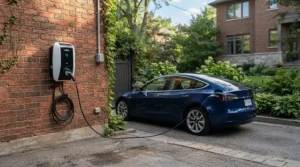
What to Expect: Real-World Self-Consumption Optimisation
Self-consumption optimisation is the slightly technical way of describing a simple goal: using as much of your own solar generation on-site as possible, rather than exporting it to the grid for a much lower rate than you’d pay to buy it back later.
In practice, a well-configured solar-diversion charger typically lifts a household’s self-consumption rate noticeably compared with no diversion at all, because a car parked on the drive during daylight hours is one of the few loads flexible enough to soak up an unpredictable, fluctuating surplus. The catch is timing: self-consumption optimisation only works if the car is actually home when the sun is out. A household where the car leaves for work at 8am and doesn’t return until 6pm will see far less benefit from surplus-only charging than one with someone working from home, or a second car used for the commute.
What the spec sheet won’t tell you, but reviewers note, is that the more precisely a charger tracks generation — checking every few seconds rather than every few minutes — the more solar it captures on a genuinely changeable UK day, where cloud cover can shift output by kilowatts in the space of a minute. This is exactly why the myenergi Zappi‘s dedicated CT-clamp monitoring earns its reputation: coarser systems simply can’t react as fast.
Eco Charging Mode Explained: Free Miles vs Faster Miles
“Eco charging mode” gets used loosely across this market, and it’s worth being precise about what it means on each unit, because the differences genuinely change how many free miles you’ll bank.
On the myenergi Zappi, Eco mode blends grid power with solar to guarantee a minimum charge rate, while Eco+ is the surplus-only setting that pauses when generation drops. On the Ohme Home Pro, there’s no equivalent surplus-only tier — its solar-priority setting always tops up with grid electricity to hit the minimum threshold. The Hypervolt Home 3 Pro sits between the two, with its Super Eco mode functioning much like the Zappi’s Eco+.
The trade-off across all of them is the same shape: surplus-only modes deliver genuinely free electricity but charge more slowly and less predictably, since output depends entirely on the weather. Blended eco modes charge faster and more reliably but cost something, since a portion of every session draws grid electricity at your normal import rate. Neither is objectively “better” — it depends whether your priority is minimising cost per mile or guaranteeing the car is ready by a certain time.
Long-Term Cost & Maintenance
Running the numbers over five years reframes a lot of these purchase decisions. A household charging roughly 10,000 miles’ worth of driving a year, doing so mostly during daylight on genuine solar surplus, is displacing electricity that would otherwise cost somewhere in the region of 20–35p per kWh at typical 2026 import rates. Over five years, that adds up to a meaningful multiple of the charger’s own installed price, which is why the up-front cost difference between, say, the Pod Point Solo 3S and the Andersen A3 matters less than it first appears once solar savings are properly accounted for.
Maintenance costs are genuinely low across this entire category — these are largely solid-state devices with no moving parts beyond a relay and, on tethered models, a cable. The main variable cost over time is warranty length: a charger with a three-year warranty that develops a fault in year four means paying for a call-out and parts yourself, while the Andersen A3‘s seven-year cover or the five-year terms on the Wallbox Pulsar Max and Pod Point Solo 3S push that risk considerably further down the road.
Safety, Regulations and Compliance Guide
Every charger on this list requires professional installation by a qualified electrician — this isn’t optional advice, it’s a legal requirement, and none of these units should be self-installed. Installations must comply with the UK’s BS 7671 Wiring Regulations, the recognised standard governing electrical safety in domestic properties.
Solar-diversion chargers specifically add a wrinkle: the CT clamp installation needs to correctly identify the direction of current flow, and on properties with solar batteries or more complex three-phase setups, getting this wrong can lead to inaccurate diversion or, in rare cases, safety issues. It’s worth asking any prospective installer specifically about their experience wiring solar-aware EV chargers, not just EV chargers in general, since the two aren’t quite the same job.
On the funding side, OZEV grant eligibility has narrowed considerably in recent years. As of the most recent guidance, the residential grant is aimed specifically at flat owners and renters rather than homeowners with a private driveway, providing up to £500 towards installation costs. If you fall into an eligible category, this is worth checking before committing to a specific installer, since some run the grant application on your behalf.
For a deeper technical grounding in how the CT-clamp side of solar EV charging actually works, Which? Trusted Trader’s guide to solar EV chargers is a useful independent read alongside manufacturer material.
Features That Actually Matter (And Those That Don’t)
Genuinely worth paying for: real-time (rather than periodic) solar monitoring, a warranty of five years or longer if your budget stretches, and native integration with whichever electricity tariff you’re actually on. These three factors do more for your total cost of ownership than almost anything else on a spec sheet.
Largely marketing noise for most buyers: eye-catching LED light displays, voice assistant integration that most owners use once and forget, and three-phase 22kW charging capability for a car that can only accept 7.4kW anyway — a common mismatch that adds cost without adding any real-world benefit unless a faster-charging vehicle is genuinely on the horizon.

Frequently Asked Questions
❓ Do all EV chargers work with solar panels?
❓ How much can a solar diversion charger actually save me?
❓ Do I need a battery to use solar EV charging?
❓ Can I add solar diversion to an existing EV charger?
❓ Is a smart EV charger for solar diversion eligible for a government grant?
Conclusion
There isn’t a single “best” smart EV charger for solar diversion — there’s a best one for your roof, your driving pattern, and how much you’re willing to spend chasing the last few percent of free electricity. The myenergi Zappi remains the specialist’s choice for anyone whose entire buying decision hinges on genuine surplus-only charging, while the Hypervolt Home 3 Pro offers a strong middle ground of solar sophistication and build quality for buyers who don’t want to compromise on either. If your household leans more heavily on a smart electricity tariff than on solar generation, the Ohme Home Pro will likely save you more in practice than a more solar-focused rival. And if budget, warranty length or sheer wall space are the deciding factors, the Pod Point Solo 3S, Wallbox Pulsar Max and EO Mini Pro 3 each solve a different version of that problem without asking you to give up genuine solar capability altogether. Whichever you land on, the fundamentals matter more than the badge on the box: check the solar mode type, confirm your installer understands CT clamp positioning, and match the charger to how your household actually uses electricity, not just how it’s marketed.
✨ Don’t Miss These Exclusive Deals!
🔍 Take your home charging setup to the next level with one of the carefully researched chargers above. Click through to check current pricing and availability, and start banking genuinely free solar miles.
Recommended for You
- Portable EV Charger Cable: 7 Best Picks for UK Drivers (2026)
- Type 2 EV Charging Cable: 7 Best Picks for UK Drivers (2026)
- EV Charger for Octopus Intelligent Go: 7 Best Picks (2026)
Disclaimer: This article contains affiliate links. As an Amazon Associate, I earn from qualifying purchases. If you purchase products through these links, we may earn a small commission at no additional cost to you.
✨ Found this helpful? Share it with your friends! 💬🤗
