
In This Article
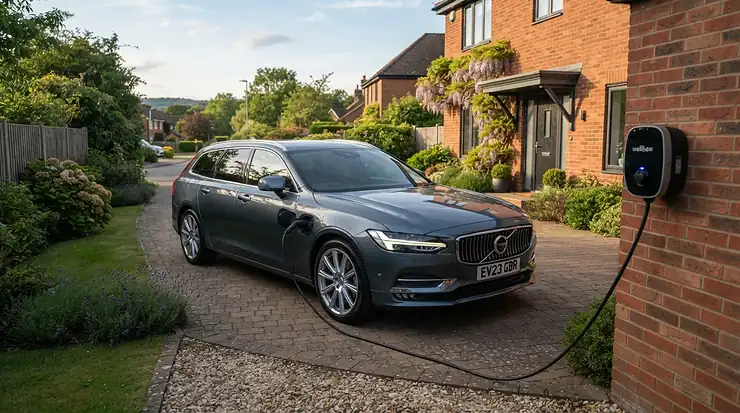
Somewhere around 11:30pm, while most of the country is asleep, a small army of EV chargers up and down the UK quietly wake up and start pulling electricity at a fraction of the daytime rate. That’s Octopus Intelligent Go doing its job — and if you’ve landed here, you’ve probably already worked out that the tariff is only half the story. The right EV charger for Octopus Intelligent Go is what actually turns “cheap electricity exists somewhere” into “my car is full by 7am for pennies.”
Here’s the catch nobody tells you when you sign up: Intelligent Octopus Go communicates directly with either your car or your charger to decide when charging happens, and it can only extend those money-saving bonus slots to hardware it can actually talk to. Buy the wrong box and you’re stuck on a flat, fixed overnight window rather than the smarter, sometimes-longer dispatch periods Octopus adds when the grid has spare capacity.
What is Octopus Intelligent Go? It’s a smart electric vehicle tariff from Octopus Energy that schedules off-peak EV charging automatically, guaranteeing a discounted rate during a set overnight window while extending extra cheap slots whenever wholesale demand allows — provided your charger or car supports the connection.
This guide covers seven real, currently available chargers confirmed to work with the tariff, with honest analysis of who each one actually suits — from renters on a tight budget to solar-panel households chasing every last free kilowatt. For the full mechanics of how the tariff itself works, Octopus Energy’s own Intelligent Octopus Go page is worth a read before you buy anything.
Quick Comparison Table
| Charger | Best For | Price Range (Unit) | Smart Tariff Integration | OZEV Grant Eligible |
|---|---|---|---|---|
| Ohme Home Pro | Deepest Octopus integration | £450–£550 | Native, direct API | Yes |
| Indra Smart Pro | Budget-conscious buyers | £395–£500 | Native | Yes |
| VCHRGD Seven Pro | Features per pound | £385–£440 | Via Powerverse app | Yes |
| Rolec EVO 7.4kW | Lowest confirmed price | £400–£470 | Scheduled, app-based | Yes |
| Hypervolt Home 3 Pro | All-round premium build | £625–£1,050 | Native, Kraken SmartFlex | Yes |
| myenergi Zappi v2.1 | Solar panel households | £780–£900 | Native | Yes |
| Andersen A3 | Design and warranty | £900–£995 | Native | Partial (tenants/flats) |
Looking at the spread above, the price gap between the cheapest and most expensive charger here is roughly £650 on the unit alone, yet the two cheapest options — the Rolec EVO 7.4kW and VCHRGD Seven Pro — still qualify for full off-peak EV charging under Intelligent Octopus Go. What buyers are really paying the premium for further up the table isn’t the tariff connection itself, but extras like solar diversion, weatherproofing, or design. If your only goal is unlocking cheap overnight rates, the budget end of this table already gets you there.
💬 Just one click — help others make better buying decisions too!😊
Top 7 EV Chargers for Octopus Intelligent Go: Expert Analysis
Choosing between these seven comes down to matching the charger’s strengths to your actual household — solar panels, budget, design taste, or sheer laziness about managing another app. Here’s the honest breakdown.
1. Ohme Home Pro — deepest native Octopus tariff integration
The Ohme Home Pro was effectively built with Octopus in mind, and it shows the moment you connect it. Unlike chargers that simply hold a fixed off-peak window, the Ohme Home Pro pulls live data from Octopus’s Kraken platform and can access extended bonus dispatch slots beyond the standard six-hour window, so on nights when the grid has spare renewable capacity, your car may charge for longer at the cheap rate without you lifting a finger. The unit runs at 7.4kW over a single-phase supply, comes with a 5-metre tethered cable, and includes a colour LCD screen — a genuinely rare feature at this price point that shows live charge status and running cost without opening the app. Connectivity is 4G-only rather than Wi-Fi, which Ohme compensates for with a free SIM covering the first three years.
Based on the spec comparison with its rivals, this is the charger to buy if smart tariff integration is your single biggest priority and you’re not fussed about matching your charger to your paintwork. Reviewers consistently report high satisfaction with reliability, reflected in a Trustpilot score sitting around 4.7 out of 5 from tens of thousands of reviews — among the strongest of any UK home charger brand. The one real limitation reviewers flag repeatedly is 4G signal dependency; if your driveway sits in a mobile not-spot, the smart features simply won’t function properly.
Pros:
- ✅ Deepest native Octopus Intelligent Go integration on the market
- ✅ Built-in colour LCD screen shows live cost and status
- ✅ Free 3-year 4G SIM removes reliance on home Wi-Fi
Cons:
- ❌ 4G-only connectivity struggles with poor mobile signal
- ❌ Single-phase only, no 22kW three-phase option
The unit typically sits around £450–£550, with a fully installed price commonly landing in the £950–£1,050 range before any OZEV grant — for most Octopus households, this is the best all-round value pick in the entire line-up.
2. Indra Smart Pro — best-value UK-built smart charger
Assembled in Malvern, Worcestershire, and partly owned by OVO Energy, the Indra Smart Pro punches well above its price bracket. It charges at the maximum single-phase rate of 7.4kW and, crucially for anyone chasing off-peak EV charging savings, integrates natively with Intelligent Octopus Go as well as OVO’s Charge Anytime tariff. What most buyers overlook about this model is the hardware bundled into the box: a surge protection device and PEN fault detection come as standard, which on many other chargers are extra components your electrician has to source and fit separately, typically adding £100–£250 to the installation bill.
The trade-off for that value is polish. There’s no display screen — just a status LED ring — so day-to-day monitoring happens entirely through the Indra app, which does the job but isn’t as slick as Ohme’s or Hypervolt’s. Reviewers consistently note that the app has improved steadily through regular updates, and solar-panel owners in particular report meaningful reductions in charging costs thanks to the Super Eco mode, which restricts charging exclusively to surplus solar generation.
Pros:
- ✅ UK-built in Malvern with strong OZEV grant eligibility
- ✅ Native Octopus Intelligent Go and OVO Charge Anytime support
- ✅ Built-in surge protection device cuts installation costs
Cons:
- ❌ No display screen, relies entirely on the app
- ❌ Wi-Fi setup less polished than Ohme or Hypervolt
Expect to pay roughly £395–£500 for the unit, with installed totals commonly falling between £800 and £1,000 — one of the cheapest routes to a fully-featured smart charger currently on sale.
3. VCHRGD Seven Pro — most features per pound
If you’re the sort of buyer who reads spec sheets line by line, the VCHRGD Seven Pro rewards that habit. For a price that undercuts most rivals, you get two solar charging modes, dynamic load balancing, RFID access cards, OCPP 1.6J compliance for third-party energy management, and a 7.5-metre tethered cable — genuinely longer than what most competitors offer as standard. Here’s what to weigh: the smart tariff scheduling runs through the Powerverse app rather than a platform VCHRGD built and controls entirely in-house, which is worth knowing before you commit, even though it currently works reliably with Intelligent Octopus Go.
The build itself is straightforward matte black plastic rather than anything design-led, and it’s a slightly chunkier unit than some rivals — worth checking clearance on a narrow path. What the spec sheet won’t tell you, but reviewers note, is that the bundled extras (CT clamp, two RFID cards, cable lock) often save installers time on-site, which is reflected in a favourable installed price relative to what’s actually in the box.
Pros:
- ✅ Most smart features per pound of any charger tested
- ✅ Two solar modes plus RFID access included as standard
- ✅ 7.5-metre cable, longer than most tethered rivals
Cons:
- ❌ Smart features depend on third-party Powerverse app platform
- ❌ Newer brand with a shorter track record than rivals
Pricing runs from around £385 for the untethered version up to roughly £440 tethered, with installed totals typically in the £800–£950 range — hard to beat if smart functionality per pound is your priority.
4. Rolec EVO 7.4kW — cheapest confirmed Octopus-compatible charger
Manufactured by Rolec Services in Boston, Lincolnshire — a company that’s been building EV charging equipment since 2010 — the Rolec EVO 7.4kW is the least expensive charger in this round-up with confirmed Intelligent Octopus Go compatibility. It handles scheduling through its own app rather than a direct live API connection, meaning you set the off-peak window and the charger sticks to it, rather than dynamically chasing extended bonus slots the way the Ohme Home Pro does. For most households, that distinction barely matters day to day.
Based on the spec comparison, the standout here is what’s built into the unit at no extra cost: PME fault detection and integrated surge protection, which typically saves £150–£250 in electrician’s labour and materials that other budget chargers make you pay separately. It also carries a five-year warranty — longer than most competitors at this price, including some considerably more expensive ones.
Pros:
- ✅ Cheapest confirmed Octopus Intelligent Go-compatible charger
- ✅ Built-in PME fault detection saves on installation labour
- ✅ Five-year warranty, longer than most competitors
Cons:
- ❌ No direct supplier API for automatic Agile-style scheduling
- ❌ Fixed off-peak window only, not deep bidirectional integration
The unit alone typically costs £400–£470, and thanks to the bundled safety hardware, real-world installed totals often land in the £650–£850 bracket — the strongest value case in this entire guide for buyers on a tight budget.
5. Hypervolt Home 3 Pro — best all-round premium build
Designed and built in Rainham, Essex, the Hypervolt Home 3 Pro is the charger for buyers who want premium hardware without sacrificing smart tariff integration. It carries an IP66 weatherproof rating — the toughest in this line-up — alongside IK10 impact resistance and an anodised aluminium front, built to survive a decade of exposed UK weather without complaint. The Octopus connection runs through Kraken SmartFlex at the charger level rather than the vehicle level, which is a genuinely useful distinction: it means the smart scheduling works with any EV, not just cars on Octopus’s own compatible-vehicle list.
Reviewers consistently note real-world reliability as a highlight, backed by a Trustpilot score around 4.8 out of 5 from over 2,300 reviews. One published long-term ownership log — eight months and over 3,200kWh through the unit — reported a monthly home-charging bill of under £15 on Octopus Intelligent Go, versus an estimated £90-plus at standard rates for the same usage. Three solar modes are included, though the most aggressive (Super Eco) has a 1.4kW surplus threshold, meaning it needs slightly more spare solar generation to kick in than the myenergi Zappi‘s equivalent mode.
Pros:
- ✅ IP66 weatherproofing, toughest rating in this round-up
- ✅ Native Octopus Kraken SmartFlex integration works with any EV
- ✅ Three cable length options including a 10-metre choice
Cons:
- ❌ Among the priciest units before installation costs
- ❌ Battery storage CT clamp integration still not fully live
Unit pricing generally sits between £625 and just over £1,000 depending on cable length and retailer, with fully installed totals commonly quoted around £1,025–£1,225.
6. myenergi Zappi v2.1 — best for solar self-consumption
For anyone with panels on the roof, the myenergi Zappi v2.1 is in a different category to everything else on this list. Its Eco+ mode charges the car exclusively from surplus solar generation — no grid draw at all when conditions allow — which none of the tariff-focused chargers here replicate with the same precision. It still works with Intelligent Octopus Go for the hours after dark when solar obviously isn’t an option, giving households genuinely free daytime miles plus cheap overnight top-ups.
Here’s what to weigh: that solar sophistication comes at the highest installed price in this guide, and the 3-year warranty is shorter than the Rolec EVO or Andersen A3 offer. Reviewers consistently praise the built-in PEN fault detection, which — like the Indra Smart Pro and Rolec EVO — trims installation costs by removing the need for a separate earth rod. The Zappi also plugs into the wider myenergi ecosystem, including the eddi hot-water diverter and libbi home battery, which matters if you’re planning to expand your home energy setup later.
Pros:
- ✅ Unmatched Eco+ mode charges from 100% solar surplus
- ✅ Built-in PEN fault detection saves on install costs
- ✅ Connects to the wider myenergi eddi and libbi ecosystem
Cons:
- ❌ Most expensive mainstream charger once installed
- ❌ Only a 3-year warranty versus 5–7 years elsewhere
Unit prices range roughly £780–£900 depending on the exact model, with installed totals typically quoted between £1,100 and £1,500 — a premium that only fully pays for itself if you actually have solar panels to feed it.
7. Andersen A3 — best design and longest warranty
The Andersen A3 exists for one specific type of buyer: someone who sees the charger as a permanent fixture on the front of their house, not just a box that dispenses electricity. It’s available in 247 colour and finish combinations, including real wood facias, and its hidden-cable system tucks the lead away inside the unit when not in use, leaving a genuinely clean wall-mounted profile. Since September 2025, all Andersen A3 units have shipped with native Intelligent Octopus Go integration, closing what was previously the model’s biggest practical gap.
What the spec sheet won’t tell you, but reviewers note, is that the trade-off for that design focus is a narrower tariff library than the Ohme Home Pro and no 4G backup connection — Wi-Fi and Bluetooth only. Solar integration is included in the standard price rather than charged as an extra, letting you blend grid and surplus solar power via a simple slider in the app. The seven-year warranty is the longest of any charger in this guide by a comfortable margin, more than double what most rivals offer.
Pros:
- ✅ Seven-year warranty, longest of any charger in this guide
- ✅ Hidden cable design and 247 colour and finish options
- ✅ Solar integration included as standard, no extra cost
Cons:
- ❌ Among the most expensive chargers once installed
- ❌ No 4G backup and a narrower tariff library than rivals
The unit typically costs £900–£995, with installation pushing the full fitted price to roughly £1,300–£1,500 — a genuine premium, and one that’s really being spent on looks and longevity rather than smarter tariff handling.
Setting Up Your Charger for Intelligent Octopus Go: A Practical Guide
Getting the hardware on the wall is only step one. The savings only start flowing once the charger and the tariff are actually talking to each other, and this is where most of the avoidable mistakes in the first month happen.
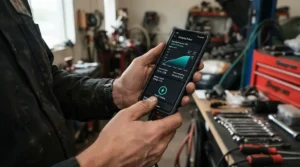
Start by confirming your specific model appears on Octopus’s live list of compatible devices inside the Octopus app under “Devices” — brands update firmware regularly, so even chargers confirmed compatible today should be checked again after any major software update. Next, connect the charger to your home network (or, for the Ohme Home Pro, confirm 4G signal strength at the installation point) before you attempt pairing; a shaky connection during setup is the single most common cause of failed device linking. Once paired, set your target charge level and ready-by time rather than leaving defaults in place — Octopus uses this information to decide how aggressively to schedule your overnight charging window.
In the first 30 days, resist the urge to manually override every session. The scheduling algorithm needs a few charge cycles to learn your typical usage pattern, and constant manual intervention can undermine that. Do check your Octopus app weekly during this period to confirm sessions are landing inside the expected off-peak EV charging window and that you’re not seeing unexpected peak-rate charges, which usually indicate a pairing issue rather than a tariff problem. Finally, keep firmware updates switched to automatic — nearly every charger in this guide receives periodic improvements to how it handles smart tariff integration, and skipping updates is one of the quietest ways to lose access to newer, more generous Octopus dispatch behaviour.
Who’s Actually Charging: Three Real-World Scenarios
The flat-dweller with on-street parking. A driver relying on a nearby lamppost charger or a shared bay doesn’t need most of what’s in this guide — but for anyone with dedicated off-street parking who’s renting, the Indra Smart Pro or Rolec EVO 7.4kW make the most financial sense, since both remain OZEV grant-eligible for tenants and flat owners, cutting the net cost by up to £500 before installation even begins.
The family with solar panels and two cars. Households already generating their own electricity get disproportionately more value from the myenergi Zappi v2.1‘s Eco+ mode, using daytime surplus for the school-run car and falling back to Intelligent Octopus Go’s cheap overnight window for the second vehicle once the sun goes down. The installed cost is higher, but so is the combined saving from two separate charging strategies running on one box.
The first-time EV owner who wants it to just work. For someone switching from petrol for the first time, deep customisation options can be more confusing than helpful. The Ohme Home Pro‘s built-in screen and market-leading native Octopus integration remove almost all of the guesswork — plug in, set a ready-by time, and let the tariff and charger handle everything else without a second app or a manual schedule to maintain.
Buyer’s Decision Framework: Which Charger Actually Fits You
If you have solar panels and want to maximise self-consumption, choose the myenergi Zappi v2.1, because no other charger in this guide diverts surplus generation as precisely. If your absolute priority is squeezing every possible bonus slot out of Octopus’s dispatch algorithm, choose the Ohme Home Pro, because its native API connection is the deepest integration currently available. If you’re renting or own a flat and want to keep costs to an absolute minimum, choose the Rolec EVO 7.4kW or Indra Smart Pro, because both remain OZEV grant-eligible and carry some of the lowest installed prices here. If the charger needs to match your home’s exterior and you plan to stay put for a decade or more, choose the Andersen A3 for its finish options and seven-year warranty. And if you simply want the most robust, weatherproof unit that works with any EV regardless of brand, the Hypervolt Home 3 Pro is the safest all-round choice.
How to Choose an EV Charger for Octopus Intelligent Go
- Confirm live Octopus compatibility first. Check the current device list inside the Octopus app rather than relying on a manufacturer’s marketing claim, since integrations are added and occasionally paused over time.
- Decide how much you value native API integration versus a fixed schedule. Chargers like the Ohme Home Pro and Hypervolt Home 3 Pro dynamically chase extended off-peak slots; budget options like the Rolec EVO stick to a set window that’s simpler but potentially less generous on high-renewable nights.
- Factor in your parking layout before cable length. A 5-metre tethered cable is fine for a garage-adjacent bay; wider driveways or awkwardly positioned charge ports often need the 7.5-metre or 8-metre options some models offer.
- Check OZEV grant eligibility for your situation. Since April 2022, homeowners with a private driveway are generally excluded, but renters, flat owners, and some landlords can still claim up to £500 towards the cost — full current eligibility rules sit on GOV.UK’s EV chargepoint grant page.
- Weigh solar integration honestly. If you don’t have panels and have no plans to install them, paying a premium for Eco+-style solar diversion on the myenergi Zappi delivers little practical benefit.
- Look at warranty length as a genuine differentiator. Terms here range from three years to seven, and that gap matters more the longer you expect to stay in the property.
- Don’t ignore connectivity type. 4G-only chargers sidestep home Wi-Fi problems but depend on mobile signal at the installation point; Wi-Fi/Bluetooth units need a reliable router signal reaching the driveway or garage.
Smart EV Chargers vs Manual Off-Peak Timers: What Actually Changes
It’s tempting to assume any charger with a basic timer function delivers the same result as a fully Octopus-integrated model, since both can technically restrict charging to overnight hours. In practice, the two behave quite differently. A manual timer, set once in a generic charger’s own app, will faithfully charge within a fixed window every night regardless of what’s happening on the grid — reliable, but static. A charger with genuine smart tariff integration, like the Ohme Home Pro or Hypervolt Home 3 Pro, receives live signals from Octopus and can extend the overnight charging window on nights when wholesale demand is low, occasionally delivering several extra hours of discounted electricity that a fixed-timer charger simply never sees.
The practical difference shows up on the bill. Households on a manual schedule capture the guaranteed six-hour window and nothing more; households on a natively integrated charger capture that same window plus an unpredictable but real bonus, which Octopus reports adds up to typical annual savings well beyond what the base tariff alone delivers. For most buyers, that gap alone justifies choosing a properly integrated charger over a generic model with a basic scheduler bolted on.
What to Expect: Real-World Overnight Charging Performance
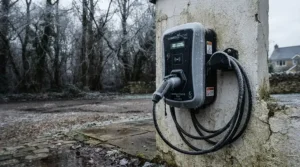
On paper, a 7.4kW charger delivers up to roughly 25–30 miles of range per hour, but real-world overnight charging performance depends heavily on your specific car’s onboard charger and battery size. A typical 60–75kWh family EV — something like a Volkswagen ID.4 or Kia EV6 — will comfortably charge from near-empty to full within Intelligent Octopus Go’s standard overnight window, even without any bonus slots. Smaller-battery cars, such as a Nissan Leaf or Mini Electric, often finish charging well before the window even ends, leaving genuine headroom for the tariff’s extended dispatch periods to top up further or charge a second vehicle.
What most buyers overlook is that the published overnight charging window isn’t fixed in stone. Octopus’s baseline period runs from 11:30pm to 5:30am, but on nights with high renewable output or low grid demand, natively integrated chargers can receive additional cheap-rate sessions outside that core window — sometimes stretching into the early evening. Reviewers consistently note that this bonus behaviour is where chargers like the Ohme Home Pro and myenergi Zappi‘s Agile-reading mode pull ahead of simpler, fixed-schedule units, since only they can actually respond to those extended windows automatically.
Long-Term Cost & Maintenance
The headline figure worth sitting with is Octopus’s own published data: customers typically save several hundred pounds a year on Intelligent Octopus Go compared with a standard variable tariff, with the exact amount depending on household electricity use and how much charging shifts to off-peak hours. Charging a typical 60kWh EV from empty at the tariff’s discounted rate costs a few pounds — a fraction of an equivalent tank of petrol, and considerably less than public rapid charging.
Maintenance costs are genuinely low across every charger in this guide. All are OZEV-approved units built to current UK safety standards, with warranties ranging from three to seven years covering hardware faults. The main ongoing cost to budget for is periodic testing — most manufacturers recommend an annual visual and electrical check, similar to any other fixed home electrical appliance — and, for chargers relying on 4G, the eventual cost of a data plan once any included free period expires. Chargers with built-in surge protection and PEN fault detection, such as the Indra Smart Pro, Rolec EVO, and myenergi Zappi, reduce the risk of costly downstream electrical faults over the unit’s lifespan, which is worth factoring into any total cost of ownership comparison alongside the sticker price.
Features That Actually Matter (And Those That Don’t)
Marketing copy for home chargers tends to lean heavily on numbers that sound impressive but rarely change day-to-day experience. Charging speed above 7.4kW, for instance, is largely irrelevant for most UK homes, since a standard single-phase domestic supply caps out there regardless of what the charger itself can theoretically deliver — three-phase 22kW options only matter if your property already has three-phase power installed, which very few domestic properties do.
What genuinely matters is smart tariff integration depth, because that’s what determines whether you capture Octopus’s bonus off-peak slots or just the guaranteed baseline window. Built-in safety hardware — PEN fault detection and surge protection — matters too, since it reduces both installation cost and long-term electrical risk. Display screens, by contrast, are a nice-to-have rather than essential; the Indra Smart Pro proves a charger can be perfectly capable without one, provided the app is solid. Colour options and premium finishes, the Andersen A3‘s whole selling point, matter enormously to some buyers and not at all to others — it’s a genuinely personal trade-off rather than a technical one.
Safety, Regulations & Compliance Guide
Every charger in this guide must comply with The Electric Vehicles (Smart Charge Points) Regulations 2021, which came into force in mid-2022 and apply to all new chargepoints sold for domestic use in Great Britain. In practice, this means every unit here defaults to off-peak charging out of the box, applies a randomised delay of up to ten minutes at the start of each session to help the National Grid manage demand spikes, and includes baseline cybersecurity and tamper-detection features.
Installation must be carried out by a qualified, OZEV-approved electrician — this isn’t a DIY job under UK regulations, regardless of how straightforward a charger’s marketing makes it look. All seven chargers featured here are OZEV-registered, meaning they meet the government’s minimum technical specification and are eligible for chargepoint grants where the applicant otherwise qualifies. Worth noting: eligibility for the actual grant money depends on your circumstances (renter, flat owner, or landlord) rather than the charger itself, so check current criteria before assuming a discount applies.
Frequently Asked Questions
❓ Does every EV charger work with Octopus Intelligent Go?
❓ How much can I save switching to smart tariff integration?
❓ What is the standard overnight charging window on Intelligent Octopus Go?
❓ Can I install an EV charger myself to save money?
❓ Is a smart charger worth it if I don't have solar panels?
Conclusion
Picking the right EV charger for Octopus Intelligent Go really comes down to being honest about what you actually need from it. If deep, hands-off smart tariff integration is the whole point of the exercise, the Ohme Home Pro remains the most complete package, and its price no longer makes it the expensive option it once was. Budget-conscious buyers, especially renters and flat owners chasing every pound of OZEV grant, get excellent value from the Rolec EVO 7.4kW or Indra Smart Pro without giving up genuine tariff compatibility. Solar households have one clear answer in the myenergi Zappi v2.1, while anyone prioritising build quality or kerb appeal has strong cases for the Hypervolt Home 3 Pro and Andersen A3 respectively.
Whichever you choose, the underlying maths doesn’t change much: pairing a genuinely compatible smart charger with Intelligent Octopus Go turns overnight electricity from an afterthought into one of the cheapest ways to run a car in the UK today, and the difference between a lucky guess and a properly researched purchase is usually a few hundred pounds a year, every year, for as long as you own the charger.
✨ Don’t Miss These Exclusive Deals!
🔍 Take your home charging setup to the next level with these carefully selected chargers. Click on any highlighted product to check current pricing and availability. These picks will help you unlock genuinely cheap, reliable overnight charging for years to come!
Recommended for You
- Tethered vs Untethered EV Charger: 7 Best UK Picks (2026)
- Best Home EV Charger UK: 7 Top Picks & OZEV Grants (2026)
- Home Energy Monitor For Solar Panels: 7 Best UK Picks (2026)
Disclaimer: This article contains affiliate links. As an Amazon Associate, I earn from qualifying purchases. If you purchase products through these links, we may earn a small commission at no additional cost to you.
✨ Found this helpful? Share it with your friends! 💬🤗
