
In This Article
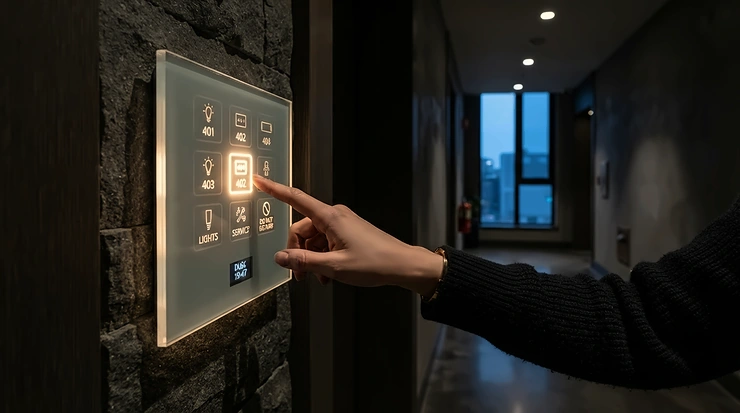
A smart switch for multi-gang plates is a wall-mounted controller that puts two, three or more lighting circuits on one faceplate. Each channel can be switched by app, voice or schedule while still working as an ordinary button. It replaces your existing plate, keeps the familiar look and adds automation.
Sounds simple. It isn’t. The typical British hallway or kitchen plate hides a tangle of loop-in cables, switched lives and, very often, no neutral wire at all. Add the fact that most smart kit is designed for single-gang boxes in other countries, and a “quick Saturday upgrade” can turn into a three-hour negotiation with a back box that’s 5 mm too shallow.
This guide is built to save you that grief. It compares seven real options across budget, mid-range and premium, and it explains what each spec means once the plate is on your wall. We also cover 2-gang/3-gang plates, wall plate sizing and multi-channel switching in proper depth, because those three details decide whether a purchase fits or ends up in the returns pile.
One more thing before we start. Wired smart switches are, as T3’s installation guide explains, a very different animal from smart bulbs, with wiring rules that vary from house to house. Prices below are ranges from my research and will move, so always check current prices on amazon.co.uk before buying.
Quick Comparison: 7 Picks for Multi-Gang Plates at a Glance
| Product | Gangs / channels | Neutral needed? | Control | Best For |
|---|---|---|---|---|
| Lightwave Smart Series Dimmer (3-Gang) | 3 | Optional (dimmable loads) | Link Plus hub | Older homes, dimmable LEDs |
| Aqara Smart Wall Switch H1 EU (Double Rocker) | 2 | Yes (this variant) | Zigbee 3.0 hub | Zigbee fans, tidy 2-channel plates |
| Sonoff TX Ultimate (3-Gang, T5-3C-86) | 3 | Check wiring diagram | Wi-Fi, eWeLink | Premium feel, gesture control |
| Shelly Plus 2PM | 2 relays | Yes | Wi-Fi, local API | Keeping existing plates |
| ENER-J 3-Gang WiFi Smart Glass Touch Switch | 3 | No (live only) | Wi-Fi app | No-neutral retrofits |
| Sonoff TX T3 UK (3-Gang) | 3 | Check wiring diagram | Wi-Fi, LAN mode | Tight budgets |
| BSEED 3 Gang WiFi Touch Switch | 3 | Yes (2-way version) | Smart Life app | Neutral-equipped, 2-way setups |
Looking at the table, the dividing line is wiring rather than brand. If you have a neutral at the switch, the Aqara Smart Wall Switch H1 EU (Double Rocker), Shelly Plus 2PM and BSEED 3 Gang WiFi Touch Switch open up cheaper and more flexible territory. If you don’t, the Lightwave Smart Series Dimmer (3-Gang) and ENER-J 3-Gang WiFi Smart Glass Touch Switch are the realistic routes, and the Sonoff TX T3 UK (3-Gang) needs its wiring confirmed before you commit.
💬 Just one click — help others make better buying decisions too!😊
Top 7 Smart Switch for Multi-Gang Options: Expert Analysis
1. Lightwave Smart Series Dimmer (3-Gang) — works with or without a neutral
The standout is flexibility. Lightwave’s listing says its dimmers work both with and without a neutral, which matters enormously in a British house where the neutral often isn’t at the switch.
Key specs: it fits a standard 35 mm back box (a 10 mm spacer is included), and the 3-gang installation booklet recommends a UK standard 2-gang back box. In practice that means a three-lever plate can live in the double box you probably already have, so no chiselling. The catch is the hub, because the Link Plus is needed for app, automation and voice control.
On paper this is the “it will just work” option for period properties, particularly with dimmable LEDs. Lightwave’s own booklet states that non-dimmable loads need a neutral wire or a relay, so check your bulbs before ordering. I’d say it suits homeowners who value electrician-friendly, UK-designed kit over the lowest price.
Community threads repeatedly single out Lightwave as one of the few no-neutral routes, with hub cost and aesthetics as the usual complaints. I couldn’t verify a statistically meaningful pool of Amazon reviews, so treat that as discussion sentiment.
Pros:
- ✅ Neutral optional, so suits older wiring
- ✅ Fits a standard 35 mm back box
- ✅ UK-based support and electrician network
Cons:
- ❌ Needs the Link Plus hub as well
- ❌ Dimmable loads only without a neutral
Price: around £85-£100 for the 3-gang switch, plus the hub. Premium pricing, justified if your wiring leaves you few alternatives.
2. Aqara Smart Wall Switch H1 EU (Double Rocker) — two channels, one slim plate
Two channels in a single-gang footprint is the neat trick here. The H1 (model WS-EUK04, the version with neutral) packs a double-channel relay into one 86 mm plate.
Specs with meaning: it runs Zigbee 3.0, so it needs a Zigbee hub, and per-device power monitoring lets you see which lamps are quietly guzzling electricity. Listings state a maximum of 1,840 W (8 A resistive), which is plenty for LED lighting. It’s listed in the Connectivity Standards Alliance directory, a decent reassurance on protocol compliance. Retailers say it fits both round and square European boxes, so check physical fit against a UK box before you buy, since it’s a European design.
Honest take: this is for people already invested in Zigbee who want local control and a tidy metal-framed look. A UK-based reviewer at Mighty Gadget says he uses the H1 on most of his light switches, which is anecdotal but telling.
For homes without a neutral, Aqara also sells a no-neutral variant, and its FAQ says each load needs to draw at least about 3 W, so very low-wattage LEDs can misbehave.
Pros:
- ✅ Two channels in one compact plate
- ✅ Zigbee 3.0 with power monitoring
- ✅ Works with Home Assistant and major platforms
Cons:
- ❌ Needs a Zigbee hub to function
- ❌ European plate design, so check UK fit
Price: around £25-£40 range. Strong value if you already run Zigbee.
3. Sonoff TX Ultimate (3-Gang, T5-3C-86) — full-touch panel with gesture control
The headline is the touch surface: the whole panel is a sensor, so you can swipe, and the RGB edge lighting doubles as a night light. Sonoff’s own material also mentions haptic feedback and replaceable covers.
Specs with meaning: the 3-gang rating is 5 A per gang and 15 A total, which comfortably handles three lighting circuits. The T5-3C-86 is an 86 x 86 mm plate type, so a three-channel control sits on a footprint similar to a single-gang plate. Matter bridging via Sonoff’s CUBE OS is advertised, which should help future-proofing.
My analysis: this is the “wow” switch for a living room, but it’s a Wi-Fi design, so expect to care about your router. Check the wiring diagram on the exact listing for neutral requirements, because I couldn’t confirm that from the sources I reviewed. CNX Software has covered the specs and gesture features, but I found no robust independent review pool, so I won’t pretend to summarise one.
Pros:
- ✅ Large touch area with swipe gestures
- ✅ 15 A total across three gangs
- ✅ Replaceable covers and ambient edge lighting
Cons:
- ❌ Square 86 mm plate may not match UK frames
- ❌ Wi-Fi reliability depends on your router
Price: around £35-£50 range. Fair for the feature set.
4. Shelly Plus 2PM — keep your existing plate, add brains behind it
This one flips the premise. Rather than replacing the plate, the Shelly Plus 2PM hides behind it, so your lovely brushed-steel 2-gang plate stays exactly as it is.
Specs with meaning: two relay outputs rated 10 A per channel and 16 A total, with per-channel power metering. Two switch inputs mean each existing lever still works, and it supports cover mode for blinds. Shelly’s documentation says it can be retrofitted behind switches in standard wall boxes, and the UK PSTI compliance statement is a nice bit of regulatory homework.
The sting: a neutral is required at the install point. One retailer review notes this isn’t always available in older UK light switch wiring, which fits what community threads say.
Reviewers broadly praise local control with Home Assistant and flexible automation. This is for tinkerers, and it’s superb for ventilation fans and mixed loads. I’d say avoid it if you just want a pretty glass panel.
Pros:
- ✅ Keeps your existing plate and rockers
- ✅ Per-channel energy metering built in
- ✅ Runs fully local with Home Assistant
Cons:
- ❌ Neutral required at the box
- ❌ Needs space behind the plate
Price: around £15-£30 range. Outstanding value if your wiring allows it.
5. ENER-J 3-Gang WiFi Smart Glass Touch Switch — touch glass without the neutral
The hook is the single-live-wire design. UK retailers list it as needing no neutral and no hub, controlled via the ENERJSMART app and Alexa or Google.
Specs with meaning: it has a tempered-glass touch front with LED backlighting, and the two-gang version lists a rated load under 300 W per gang. That’s fine for LED lighting but too low for big halogen banks. One Range listing notes that a capacitor at the light fitting may be needed in some versions, which implies access to a neutral there. That detail is easy to miss, so read the listing carefully.
My analysis: it’s the budget-friendly answer for no-neutral boxes, provided your bulbs are LEDs of reasonable wattage. The usual no-neutral trade-off is tiny leakage current, so cheap LEDs can glow or flicker when off. I couldn’t verify a pool of real Amazon reviews, so I won’t characterise one.
Pros:
- ✅ No neutral at the switch required
- ✅ No hub needed, app and voice control
- ✅ Glass front with LED backlight
Cons:
- ❌ Low per-gang load limit
- ❌ Capacitor may be needed at the fitting
Price: around £20-£50 range depending on finish and seller. Good value for older houses.
6. Sonoff TX T3 UK (3-Gang) — the lowest-cost route to three channels
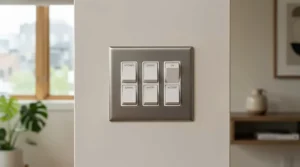
It’s the cheapest way in. RobotShop’s listing shows this UK-format three-gang with touch buttons, Alexa and Google compatibility, plus LAN control that keeps working during Wi-Fi disruptions.
Specs with meaning: the output is listed at 2 A per gang and 6 A total, so think LED lighting only, with no chunky loads. LAN mode is a genuinely useful feature, because local control keeps the lights responsive even when the internet isn’t.
My analysis: this suits renters, spare rooms and anyone testing smart lighting without investing much. I’d confirm neutral requirements on the exact listing before buying, as I couldn’t verify them from my sources. The listing I checked had no customer reviews at the time, so there’s no sentiment to summarise.
Pros:
- ✅ Very low price for three channels
- ✅ LAN control survives Wi-Fi drops
- ✅ Touch buttons with voice assistant support
Cons:
- ❌ Low 2 A per gang limit
- ❌ Basic feature set versus pricier rivals
Price: around £12-£20 range. Excellent value for light LED duty.
7. BSEED 3 Gang WiFi Touch Switch — two-way control for neutral-equipped homes
Its differentiator is two-way control: in a SmartThings community thread, the BSEED neutral-wire version was described as a 3-gang 2-way option, whereas the no-neutral alternative lost the second side.
Specs with meaning: the 2-gang listing quotes a 10 A rating with Alexa, Google and app support through Smart Life. Reviewers flag a bulky back of about 2.5 cm, so you’ll want a deeper box, and one noted the three-gang version isn’t dimmable. That matters for wall plate sizing, because a 25 mm box won’t cut it.
My analysis: it’s practical if you have a neutral and staircase-style wiring, and less so if you want a hub-free premium feel. I’d verify UK plate dimensions before buying, since some BSEED designs are aimed at other markets.
Pros:
- ✅ Two-way control with neutral wiring
- ✅ Smart Life app and voice support
- ✅ Budget-friendly 3-gang option
Cons:
- ❌ Bulky back needs a deep box
- ❌ Not dimmable on three-gang versions
Price: around £20-£40 range. Reasonable for the right wiring.
| Product | Load limit | Hub needed? | Price range | Best For |
|---|---|---|---|---|
| Lightwave Smart Series Dimmer (3-Gang) | Dimmable LED loads (check datasheet) | Yes (Link Plus) | £85-£100 + hub | Older homes |
| Aqara Smart Wall Switch H1 EU (Double Rocker) | Up to 8 A (1,840 W) | Zigbee hub | £25-£40 | Zigbee users |
| Sonoff TX Ultimate (3-Gang, T5-3C-86) | 5 A/gang, 15 A total | No | £35-£50 | Premium feel |
| Shelly Plus 2PM | 10 A/channel, 16 A total | No | £15-£30 | Keeping plates |
| ENER-J 3-Gang WiFi Smart Glass Touch Switch | About 300 W/gang | No | £20-£50 | No-neutral boxes |
| Sonoff TX T3 UK (3-Gang) | 2 A/gang, 6 A total | No | £12-£20 | Tight budgets |
| BSEED 3 Gang WiFi Touch Switch | About 10 A (2-gang listing) | No | £20-£40 | Two-way wiring |
Reading across the rows, the load limits are the bit marketing glosses over. The Sonoff TX T3 UK (3-Gang) tops out at 6 A total, while the Shelly Plus 2PM can handle 16 A, so the cheapest switch isn’t always the cheapest solution. For plain LED lighting the budget end is fine, but anything resembling a heater, fan or transformer pushes you towards the Shelly Plus 2PM or the Sonoff TX Ultimate (3-Gang, T5-3C-86).
Wall Plate Sizing: Fitting 2-gang/3-gang plates to Your Back Boxes
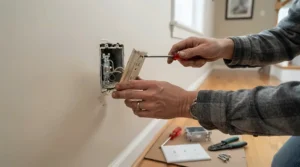
Here’s the dull-but-decisive bit. Wall plate sizing is where most returns happen, so measure before you click anything.
UK back boxes follow BS 4662. A typical 2-gang metal box has an opening of roughly 70 x 130 mm and comes in depths such as 25, 35 and 47 mm. Screw centres on a 2-gang box are about 120.6 mm, which is why UK 2-gang/3-gang plates line up so consistently. The Lightwave Smart Series Dimmer (3-Gang) sits happily in a standard 2-gang box, while electronics-heavy designs such as the BSEED 3 Gang WiFi Touch Switch can demand extra depth.
Here’s the practical routine:
- Isolate the circuit at the consumer unit and prove it dead before touching anything.
- Remove the old plate and measure internal box depth with a ruler or calliper.
- Count your cables. Four cables and a terminal block use far more space than a simple one-way feed.
- Match to the spec. If the listing says 35 mm minimum and you have 25 mm, either fit a deeper box or choose a relay such as the Shelly Plus 2PM.
- Check plate width against the paintwork, because European 86 mm plates can leave a gap on a UK frame.
For new work, Approved Document M recommends switch heights of 450 mm to 1,200 mm from finished floor level in new dwellings, which is a useful sanity check if you’re relocating a plate.

First 30 Days: Setup and Maintenance Routine for Multi-Channel Switching
Think of the first month as a settling-in period. Smart lighting usually fails at the edges rather than on day one, so build in checks.
Week one: label and test. Map each channel to a room or fitting before you close the plate. A strip of masking tape inside the box saves heartache later. Then test every channel from the app, a voice command and the physical button.
Week two: set sensible scenes. Group channels into “evening”, “morning” and “away” scenes. This is where multi-channel switching earns its keep, because one command can turn on the hall and landing while leaving the spare room alone.
Week three: watch for flicker. On no-neutral models, check for faint glow or flicker when lights are “off”. Aqara’s own guidance suggests minimum load around 3 W per channel, so very low-wattage LED lamps are the usual culprit.
Week four: back up and update. Install firmware updates, export your automations and note the Wi-Fi channel your switches use. If you chose the Sonoff TX T3 UK (3-Gang), enable LAN control so basic switching survives a router hiccup.
Common first-month mistakes include mixing dimmable and non-dimmable bulbs on one channel, forgetting that the Aqara Smart Wall Switch H1 EU (Double Rocker) needs a Zigbee hub in range, and leaving the old plate screws in the wrong holes. Set a six-monthly reminder to test every channel.
Real-World Scenarios: Which Smart Switch for Multi-Gang Setup Fits Which Home
The 1930s semi, no neutrals anywhere. You want hall, landing and stairs on one plate, mostly dimmable LED. The Lightwave Smart Series Dimmer (3-Gang) is the safest bet, with a hub costing extra. A cheaper alternative is the ENER-J 3-Gang WiFi Smart Glass Touch Switch, accepting its lower load limit and the possible capacitor at the fitting.
The new-build with neutrals. You’ve got a neutral at every switch and a Zigbee or Home Assistant habit. The Aqara Smart Wall Switch H1 EU (Double Rocker) handles two circuits per plate, while the Shelly Plus 2PM is ideal for fans and blinds behind the plate. Budget? Perhaps £15-£40 per location.
The rental or spare room. Landlord permission is the real issue, so check your tenancy before touching wiring. If permitted and neutrals exist, the Sonoff TX T3 UK (3-Gang) is a low-cost experiment at around £12-£20.
The feature-hungry living room. If you want a showpiece with swipes and ambient lighting, the Sonoff TX Ultimate (3-Gang, T5-3C-86) fits the brief. Just ensure the square plate suits your wall, and think carefully about router quality.
The common thread: wiring first, fit second, features third. Most regrets come from reversing that order.
How to Choose a Smart Switch for Multi-Gang Plates
Follow these steps, in order, and you’ll avoid most pitfalls.
- Check for a neutral. Isolate the circuit and look inside the box. No blue or black return? Restrict yourself to no-neutral designs, and expect compromises.
- Count your channels and cables. A 3-gang plate with loop-in and loop-out cables is cramped, so depth matters as much as width.
- Add up the load. Total wattage per channel and overall must stay under the switch’s rating. LEDs are forgiving, but a fan or transformer isn’t.
- Pick your ecosystem. Zigbee, Wi-Fi or hub-based? A Lightwave Smart Series Dimmer (3-Gang) needs its hub, while the ENER-J 3-Gang WiFi Smart Glass Touch Switch needs only your router.
- Confirm two-way support. Staircase or two-way circuits can be a deal-breaker, as the BSEED 3 Gang WiFi Touch Switch discussion shows.
- Match the look. Glass, metal rocker or touch panel. This is a daily-use object, so choose something you won’t resent.
- Plan for failure. What happens if Wi-Fi drops? Local control, like LAN mode, is worth real money.
Neutral or No Neutral: What Your Wiring Decides
Traditional British wiring doesn’t run a neutral to the switch, because the light fitting only needs a switched live. That’s fine for dumb switches and awkward for smart ones. A smart switch has to stay powered even when the light is off, and a neutral provides that return path.
That’s the core difference, and a neutral versus no-neutral comparison from a UK reviewer puts it plainly: switches using a neutral tend to be more reliable and feature-rich, whereas no-neutral designs trade some of that for easier fitting in older homes.
In practice, that means no-neutral designs leak a trickle of current through the lamp. Good LEDs shrug it off. Cheap, low-wattage ones may glow or flicker, which is why Aqara quotes a 3 W minimum for its no-neutral version.
My honest advice: if you can legitimately get a neutral to the box through a competent electrician, do it. It opens the door to the Aqara Smart Wall Switch H1 EU (Double Rocker) and Shelly Plus 2PM. If you can’t, accept the load limits of a Lightwave Smart Series Dimmer (3-Gang) or ENER-J 3-Gang WiFi Smart Glass Touch Switch, and choose LED bulbs with decent minimum loads.
Smart Switch for Multi-Gang vs Relay Behind Your Existing Plate
Two philosophies compete here. One replaces the entire plate with a smart switch for multi-gang use. The other leaves the plate alone and hides a relay such as the Shelly Plus 2PM behind it.
| Factor | Replacement smart plate | Relay behind existing plate |
|---|---|---|
| Looks | New design, often glass or touch | Keeps your current finish |
| Install depth | Needs space in box | Needs space behind the plate |
| Neutral | Varies by model | Usually required |
| Per-channel cost | Higher | Lower |
| Best For | Showpiece rooms | Retrofits, fans and blinds |
The takeaway is that relays win on cost and flexibility, while replacement plates win on visual impact and simplicity. A Shelly Plus 2PM costs a fraction of a Sonoff TX Ultimate (3-Gang, T5-3C-86), but you need the box depth and a neutral. If your old plate is attractive and your wiring friendly, I’d lean towards the relay. If you want a fresh look and a single product to learn, replace the plate.
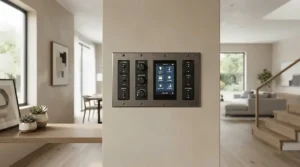
Multi-Channel Switching: Why Total Load Beats Per-Gang Load
Most buyers check “amps per gang” and stop. That misses the more important number: total load across the plate. The Sonoff TX Ultimate (3-Gang, T5-3C-86) lists 5 A per gang and 15 A total, while the Shelly Plus 2PM is 10 A per channel but 16 A overall. Combined load matters because relays and terminals heat up when stressed.
Multi-channel switching also changes how you think about automation. Individually controllable channels let you build scenes: hall light on at sunset, landing light dimmed at midnight, under-cabinet lighting only when the kitchen is occupied. With a Aqara Smart Wall Switch H1 EU (Double Rocker), per-channel power data shows exactly which lamps cost you the most. Add Zigbee sensors and the plate becomes part of a larger system.
The pitfall? Cheap three-channel plates often share a single power supply, so heavy loads on one channel compromise the others. The Sonoff TX T3 UK (3-Gang) is fine for LED strips and small fittings, but I wouldn’t run a mixed bag of old halogens through it. Do the maths: add each lamp’s wattage, divide by 230 V, and compare against the stated amps with comfortable headroom.
Features That Actually Matter (And Those That Don’t)
What matters. Local control is the headline: it keeps lights responsive when the internet drops, and the Sonoff TX T3 UK (3-Gang) and Shelly Plus 2PM both offer it. Reliable physical buttons matter too, because guests shouldn’t need an app to turn on a light. Honest load ratings and neutral clarity matter more than any marketing adjective.
What sort-of matters. Power monitoring, as on the Aqara Smart Wall Switch H1 EU (Double Rocker) and Shelly Plus 2PM, is useful if you enjoy data and won’t be life-changing if you don’t. Matter bridging is a sensible future-proofing nod, though most people will never need it.
What mostly doesn’t. Gesture swipes and RGB edge lighting on the Sonoff TX Ultimate (3-Gang, T5-3C-86) are fun, though they won’t change your daily routine. Voice-assistant compatibility is nearly universal, so it rarely differentiates models. A glass front looks lovely until it meets a toddler with jammy fingers.
Spend your attention on wiring compatibility, total load, box depth and what happens when the Wi-Fi fails. Everything else is garnish.
Safety, Regulations and Part P
Fixed electrical work in dwellings sits under Building Regulations. In England, Approved Document P covers electrical safety in dwellings, including who may carry out work and what must be certified. Replacing a like-for-like switch is generally treated differently from adding circuits or working in kitchens and bathrooms, but I’m not a qualified electrician, and rules differ between England, Wales, Scotland and Northern Ireland.
Three practical points. First, isolate at the consumer unit and prove the circuit dead; a switched-off wall switch isn’t isolation. Second, if you’re adding a neutral, running new cable or you’re unsure what you’re seeing in the box, hire a competent electrician. Third, check product compliance: look for UKCA or CE marking and, for connected devices, a UK PSTI compliance statement, as Shelly Plus 2PM documentation provides.
If you’re in a rented property, notify your landlord before changing fixed wiring. A smart switch for multi-gang plates is a rewarding upgrade, but it’s still mains electricity.
Long-Term Cost and Value Analysis
Cheap hardware isn’t always cheap ownership. Consider total cost: switch, hub, back box changes, electrician time and replacement frequency.
| Product | Upfront range | Extra costs | Value verdict |
|---|---|---|---|
| Lightwave Smart Series Dimmer (3-Gang) | £85-£100 | Link Plus hub | Premium, good for tricky wiring |
| Aqara Smart Wall Switch H1 EU (Double Rocker) | £25-£40 | Zigbee hub if you lack one | Strong for Zigbee users |
| Sonoff TX Ultimate (3-Gang, T5-3C-86) | £35-£50 | Possibly plate adaptation | Fair, feature-rich |
| Shelly Plus 2PM | £15-£30 | Neutral and box depth | Best raw value |
| ENER-J 3-Gang WiFi Smart Glass Touch Switch | £20-£50 | Possible capacitor | Good for no-neutral |
| Sonoff TX T3 UK (3-Gang) | £12-£20 | None obvious | Cheapest entry |
| BSEED 3 Gang WiFi Touch Switch | £20-£40 | Deeper box | Good if you have neutral |
The table shows value clustering in two spots. The Shelly Plus 2PM and Sonoff TX T3 UK (3-Gang) are cheapest per channel, while the Lightwave Smart Series Dimmer (3-Gang) earns its premium when no cheaper option fits your wiring. Remember hubs: a £90 switch plus a hub is a bigger spend than the sticker suggests.
For maintenance, plan on firmware updates, a yearly check that terminals are tight (by a competent person) and a spare switch if a plate is business-critical. Smart switches should outlast most smart bulbs, which is a quiet argument for this upgrade. Check current prices before buying.
FAQ
❓ Can I fit a 3-gang smart switch into a 2-gang back box?
❓ Do I need an electrician to install a smart switch for multi-gang plates?
❓ Which smart switch for multi-gang plates works without a neutral wire?
❓ Will smart switches still work if my Wi-Fi goes down?
❓ Can I use 2-gang/3-gang plates with an existing back box if the depth is shallow?
Conclusion
Choosing a smart switch for multi-gang plates comes down to three questions: what’s inside your wall, how much load you’re switching, and how much hub-and-hassle you’ll tolerate.
If your wiring is old and neutral-free, the Lightwave Smart Series Dimmer (3-Gang) and ENER-J 3-Gang WiFi Smart Glass Touch Switch are the realistic candidates. If you have a neutral, the Aqara Smart Wall Switch H1 EU (Double Rocker) offers an elegant two-channel Zigbee plate, and the Shelly Plus 2PM gives the best value for hidden, flexible control. Feature-seekers will enjoy the Sonoff TX Ultimate (3-Gang, T5-3C-86), while thrifty experimenters can start with the Sonoff TX T3 UK (3-Gang) or the BSEED 3 Gang WiFi Touch Switch.
Whatever you choose, treat wall plate sizing as non-negotiable homework and respect the safety rules. Measure the box, count the cables, add up the load, and only then click buy.
✨ Ready to upgrade?
🔍 Click any highlighted product name above to check current pricing and availability on amazon.co.uk, then pick the switch that matches your wiring. Your lights are about to get a lot cleverer! 💡🚀
Recommended for You
- Smart Relay Module For Garage Door: 7 Best Picks (2026)
- Smart Dimmer Switch: 7 Best Picks For UK Homes (2026)
- No Neutral Smart Switch: 7 Best Picks For UK Homes (2026)
Disclaimer: This article contains affiliate links. As an Amazon Associate, I earn from qualifying purchases. If you purchase products through these links, we may earn a small commission at no additional cost to you.
✨ Found this helpful? Share it with your friends! 💬🤗
