
In This Article
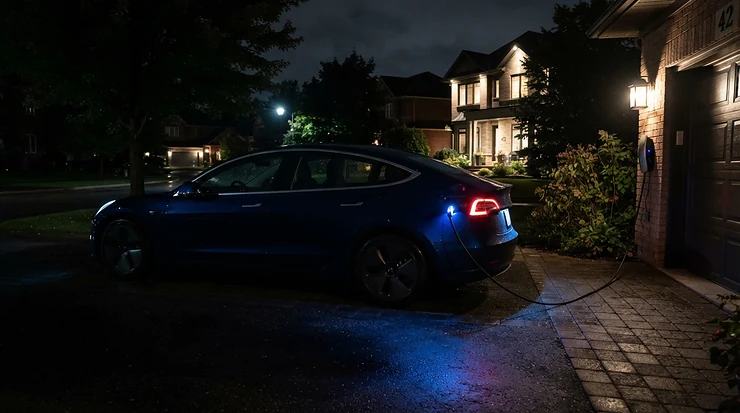
Here’s a confession every EV owner makes eventually: the charger matters more than the car. You can love your new electric motor to bits, but if the box on your wall is clunky, slow, or about as “smart” as a brick, your daily routine becomes a small chore instead of a quiet convenience. A best home EV charger is a wall-mounted or post-mounted unit — typically rated at 7.4kW for single-phase UK homes — that recharges an electric vehicle overnight, syncs with cheap-rate electricity tariffs, and reports back to an app so you always know your battery status before you’ve even put the kettle on.
We’ve spent this guide digging through manufacturer specifications, UK compliance documents, and aggregated reviewer testing to shortlist seven genuinely good options — not just the ones with the biggest marketing budgets. You’ll also find the real mechanics of the OZEV grant, the installation requirements your electrician has to satisfy, and the smart charging regulations that quietly shape every charger sold in Great Britain since mid-2022. If you’re shopping on a budget, we’ve flagged which of these count as a genuine best EV charger under £800 once installation is factored in, and if scheduling is your priority, we’ve picked out the smart EV charger with app scheduling that handles it best. Let’s get into it.
Quick Comparison Table
| Charger | Type | Power | Standout Feature | Best For |
|---|---|---|---|---|
| Wallbox Pulsar Plus | Untethered | 7.4kW | Smallest footprint on the market | Tight garages, budget buyers |
| Pod Point Solo 3 | Tethered | 7.4kW | OZEV-approved, EDF-backed | First-time buyers, grant claimants |
| Tesla Wall Connector | Tethered | 7.4kW | Native Tesla vehicle integration | Tesla-only households |
| Easee One | Tethered/Untethered | 7.4kW | Smallest wall unit, slickest app | App-focused daily drivers |
| Ohme Home Pro | Tethered | 7.4kW | Deepest smart-tariff integration | Octopus/Intelligent tariff users |
| myenergi Zappi v2 | Tethered/Untethered | 7.4kW | Best solar PV diversion | Homes with solar panels |
| Andersen A2 | Tethered | 7.4kW | UK-made hardwood design panel | Period properties, design-led buyers |
Looking across this table, the pattern that jumps out is that raw power barely differentiates these chargers — every single one caps out at 7.4kW because that’s the ceiling of a standard 32A domestic supply. What actually separates them is software: how well each one talks to your energy tariff, your solar inverter, or your specific car brand. Budget buyers should note that three of these seven — Wallbox Pulsar Plus, Pod Point Solo 3, and Tesla Wall Connector — can realistically land under £800 once installed, while the solar-focused and premium-design options push comfortably past £900.
💬 Just one click — help others make better buying decisions too!😊
Top 7 Best Home EV Chargers: Expert Analysis
1. Wallbox Pulsar Plus — smallest 7.4kW unit on the market
The Wallbox Pulsar Plus is the automotive equivalent of a good multitool: compact, unfussy, and genuinely capable despite its size. Made by Spain’s leading charger manufacturer, it’s roughly the size of a large tablet, which matters more than it sounds — in a cramped integral garage or a narrow side return, a bulky charger becomes a daily annoyance. The 7.4kW output charges a typical 60kWh battery from empty in around 8 hours, which comfortably covers an overnight window even on a standard variable tariff.
Being untethered — meaning you supply your own Type 2 cable — is a genuine trade-off worth weighing. Reviewers consistently note that this keeps the unit tidy and lets you swap cable lengths if you move the car around the driveway, but it also means an extra £80-£120 outlay on a decent cable if one isn’t bundled. Based on the spec comparison, this is best suited to buyers who value minimal wall clutter over a fixed always-there cable and who don’t mind managing their own lead. The Wallbox app handles scheduling and basic usage stats competently, though it lacks the 4G fallback and deep tariff integration of pricier rivals — something aggregated reviews flag as the main compromise at this price point.
Pros:
- ✅ Smallest 7.4kW charger currently sold in the UK
- ✅ Works as tethered or untethered depending on cable choice
- ✅ Reliable Wi-Fi app with scheduling and usage logs
Cons:
- ❌ No built-in 4G backup if home Wi-Fi drops
- ❌ Untethered version needs a separately bought cable
Typically found in the mid-£600s to low-£700s installed, the Pulsar Plus represents strong value for anyone whose main criteria are size and price rather than deep smart-tariff wizardry.
2. Pod Point Solo 3 — OZEV-approved with EDF-backed support
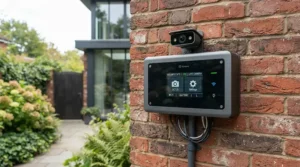
The Pod Point Solo 3 leans hard into approachability, and that’s precisely its strength. Backed by EDF Energy and fitted by Pod Point’s own installer network, it’s aimed squarely at people buying their very first home charger who want the process to feel as painless as ordering a new broadband router. The tethered 7.4kW cable means no separate purchase decisions — plug in, done.
What most buyers overlook about this model is how tightly integrated the after-sales support is: because Pod Point both manufactures and installs the unit, there’s one company to call if anything goes wrong, rather than a manufacturer-versus-installer blame game. The companion app covers smart scheduling and basic energy monitoring, which is enough for most households but noticeably lighter on granular tariff automation than the Ohme or Easee ecosystems. Reviewers who’ve used the Solo 3 for a year or more report dependable day-to-day performance, with the most common gripe being that it isn’t sold on general marketplaces — you order and install directly through Pod Point, so third-party price comparison is harder.
Pros:
- ✅ Backed by a well-established UK energy supplier
- ✅ Which?-assessed standard installation included
- ✅ Straightforward app for scheduling and usage tracking
Cons:
- ❌ Not stocked through general retailers or Amazon
- ❌ Smart features are basic next to tariff-integrated rivals
Installed pricing sits from around £650, and because it’s OZEV-approved, eligible flat owners and renters can knock a meaningful chunk off that with the current chargepoint grant — making this a genuine contender for best EV charger under £800 once the grant is applied.
3. Tesla Wall Connector — native integration for Tesla owners
If you drive a Tesla, the case for the Tesla Wall Connector writes itself: it’s built by the same company that built your car, and the two talk to each other without any third-party translation layer. The tethered cable, matte-white housing, and 7.4kW output are unremarkable on paper — what makes this one worth a dedicated slot on this list is the seamless charge-scheduling handoff with Tesla’s own vehicle app, letting you set departure times and preconditioning from the same interface you already use daily.
Here’s what the spec sheet won’t tell you: the Wall Connector’s app ecosystem is comparatively thin if you don’t drive a Tesla, since third-party vehicle support has historically lagged behind dedicated multi-brand chargers like Ohme or Easee. Based on the spec comparison, this is a smart pick almost exclusively for single-marque Tesla households, and a weaker one for anyone who might switch brands or already runs a mixed-EV driveway. Aggregated owner sentiment is strongly positive on reliability and build quality, with the main criticism being the lack of a colour screen or physical display for at-a-glance status.
Pros:
- ✅ Deepest native integration with Tesla’s own app
- ✅ Compact, minimalist design that suits most exteriors
- ✅ Strong reliability record among long-term owners
Cons:
- ❌ Weaker multi-brand vehicle support than rivals
- ❌ No onboard screen for status at the unit itself
Around £680-£750 installed, this comfortably clears the bar as a best EV charger under £800 for Tesla-only garages, though mixed-fleet households should look elsewhere on this list.
4. Easee One — smallest wall unit with the slickest app
The Easee One has quietly become something of a cult favourite among UK installers, and spending five minutes with the app explains why. Norwegian-designed and genuinely minimalist, it’s barely bigger than a paperback and can be switched between tethered and untethered operation at the touch of a button — a neat trick that means you’re not locked into one configuration for the unit’s lifetime.
Reviewers consistently note that the Easee app is one of the best in the category: clean layout, sensible defaults, and scheduling that doesn’t require a manual to configure. Built-in PEN fault detection also removes the need for a separate earth rod in many installations, which is a genuine cost saving your installer will appreciate. What most buyers overlook is that full solar integration requires Easee’s separate Equalizer accessory rather than being native out of the box — a sensible modular approach, but one that adds cost if solar diversion is a priority from day one. On the app-and-value axis specifically, this is arguably the pick to beat; on raw smart-tariff depth, the Ohme Home Pro edges ahead (see below).
Pros:
- ✅ Switches between tethered and untethered instantly
- ✅ Cleanest, most intuitive companion app in this list
- ✅ No separate earth rod needed thanks to built-in PEN protection
Cons:
- ❌ Solar integration needs an additional Equalizer accessory
- ❌ Fewer advanced tariff-automation features than Ohme
Expect a price range roughly between £600 and £950 installed depending on cable length and mounting, making the entry-level configuration another realistic best EV charger under £800 candidate.
5. Ohme Home Pro — deepest smart-tariff integration of any UK charger
If the phrase “smart EV charger with app scheduling” describes exactly what you’re shopping for, the Ohme Home Pro is the one to put at the top of your shortlist. Its boxy, techy design includes a full-colour LCD screen — genuinely useful for checking charge status without reaching for your phone — but the real story is underneath the hood. The Home Pro talks directly to smart tariffs like Intelligent Octopus Go via API, scheduling charging automatically for the cheapest overnight half-hours rather than relying on a fixed timer window.
Based on the spec comparison, this matters more than it might sound: a fixed 12am-7am timer charges at whatever the tariff happens to charge during that window, while genuine API-level integration can shift charging to exploit price dips the tariff itself signals in real time. Reviewers on compatible tariffs report charging costs of just a few pence per mile during off-peak hours — a dramatic contrast with public rapid charging. The trade-off, as with most feature-dense products, is a slightly steeper learning curve during initial setup, and the deepest benefits are tariff-dependent, so households on a standard variable rate won’t see the same upside.
Pros:
- ✅ API-level scheduling with Intelligent Octopus Go and similar tariffs
- ✅ Full-colour screen for status without opening the app
- ✅ Strong aggregated reviewer ratings for reliability
Cons:
- ❌ Full benefit depends on being on a compatible smart tariff
- ❌ Initial tariff-linking setup takes longer than basic scheduling
Typically £750-£900 installed, this sits just above our £800 budget cut-off for most quotes, but the long-run tariff savings for the right household can outweigh the upfront gap within a year or two.
6. myenergi Zappi v2 — best solar PV diversion on the market
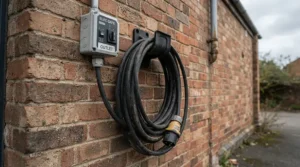
British-made and unapologetically solar-first, the myenergi Zappi v2 remains the charger to beat if you’ve already got, or are planning, rooftop panels. Its Eco+ mode monitors your home’s solar generation in real time and diverts only the surplus — power you’d otherwise export to the grid for a few pence — into your car battery, effectively giving you free miles on a sunny afternoon.
What most buyers overlook about solar diversion chargers generally is that they work perfectly well with zero panels installed too; the Zappi simply defaults to standard smart-grid or timed charging in that case, so you’re not locked out of the feature set if solar comes later. On paper, this means the Zappi is one of the few units on this list that genuinely grows with your home’s energy setup rather than becoming obsolete. Aggregated reviewer sentiment praises the build quality and the three distinct charging modes (Fast, Eco, and Eco+), while the most common criticism is that maximising Eco+ mode requires a bit of trial and error to match your household’s actual solar generation curve.
Pros:
- ✅ Unmatched solar surplus diversion via Eco+ mode
- ✅ Works fully as a standard smart charger without solar too
- ✅ UK-made with a strong long-term reliability reputation
Cons:
- ❌ Eco+ mode needs some tuning to work optimally
- ❌ Among the pricier options once installed
Expect around £900-£1,000 installed, which places it above the budget bracket but firmly justified for any household generating its own electricity.
7. Andersen A2 — UK-made hardwood design panel for period properties
Not every buyer wants their charger to look like a piece of consumer electronics bolted to a listed brick wall, and that’s precisely the gap the Andersen A2 fills. Its swappable hardwood or powder-coated front panel comes in numerous finishes, letting it blend into a Georgian terrace as easily as a new-build estate. The hidden cable tidy keeps the tethered lead completely out of sight when not in use — a small detail reviewers repeatedly single out as the difference between a charger that looks intentional and one that looks like an afterthought.
Underneath the design-led exterior sits the same 7.4kW smart charging core found across this list, so you’re not sacrificing functionality for aesthetics. Based on the spec comparison, the Andersen range’s main audience is buyers in conservation areas, listed buildings, or simply those who’ve spent real money on kerb appeal and don’t want a charger undoing it. Aggregated customer ratings sit consistently high, with the standout praise reserved for build quality and finish options; the trade-off, unsurprisingly, is price — this is the most expensive unit on our list by a clear margin.
Pros:
- ✅ Widest range of finishes of any UK home charger
- ✅ Hidden cable tidy keeps the unit genuinely discreet
- ✅ Strong aggregated customer satisfaction on build quality
Cons:
- ❌ Most expensive option in this comparison
- ❌ Premium finishes add lead time versus off-the-shelf units
Installed pricing starts around £1,200 and climbs with premium finishes — a considered investment rather than an impulse buy, but one aimed at buyers who’ve already decided budget isn’t the deciding factor.
Practical Usage Guide: Installing and Setting Up Your New Home EV Charger
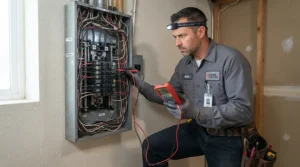
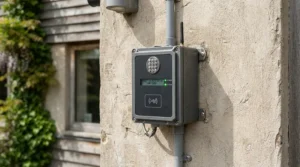
Getting a charger delivered is the easy part; getting it working properly is where most of the actual decisions happen. Start by booking a survey with an accredited installer rather than assuming any electrician can do the job — EV charging installations fall under Part 7, Section 722 of the IET Wiring Regulations (BS 7671), and installers need to be members of a recognised competent person scheme such as NICEIC, NAPIT, or SELECT to self-certify the work under Part P of the Building Regulations.
During the survey, your installer checks your main fuse rating, consumer unit spare capacity, and earthing arrangement — this last point matters more than most buyers realise. Most UK homes use PME (protective multiple earthing) as their earthing system, and BS 7671 Regulation 722.411.4.1 specifically restricts using PME for outdoor charge points unless additional protection is fitted, typically either an earth rod or a charger with built-in PEN fault detection (several chargers on this list, including the Easee One, build this in natively). Once fitted, expect a commissioning step where the installer connects the unit to your Wi-Fi, tests the safety protections, and helps you set your first charging schedule. A common first-30-days mistake is leaving the default schedule untouched — take ten minutes in the app to align it with your actual tariff’s cheap-rate window rather than a generic overnight guess.
Real-World Scenarios: Which Charger Suits Your Household?
Picture three genuinely different UK households and how their charger choice should differ. First, a young professional in a Manchester terrace with an 8-mile daily commute and no driveway solar — for them, budget and app simplicity beat exotic tariff integration, making the Wallbox Pulsar Plus or Pod Point Solo 3 the sensible call, since a modest daily top-up doesn’t need deep smart-tariff wizardry to be cheap.
Second, a family of four in Surrey with rooftop solar panels and two cars, one of them electric — here, the myenergi Zappi v2 earns its higher price tag by directing surplus solar generation straight into the battery on sunny weekends, effectively offsetting fuel costs with power they were already generating. Third, a retired couple in a converted Victorian cottage who care as much about kerb appeal as function — the Andersen A2‘s finish options let the charger disappear into the property’s character rather than standing out as an obvious modern add-on. None of these three households are wrong to want different things; the “best” charger genuinely depends on tariff, solar setup, and how much you care about the box on the wall looking like it belongs there.
✨ Don’t Miss These Exclusive Deals!
🔍 Take your home charging setup to the next level with these carefully selected products. Click on any highlighted item to check current pricing and availability. These tools will help you create genuinely convenient overnight charging your whole household will appreciate!
How to Choose the Best Home EV Charger
Cutting through marketing language, here’s the actual decision framework worth following:
- Confirm your electrical supply first. Every charger on this list runs at 7.4kW because that’s the practical ceiling for a single-phase 32A domestic supply — checking this before falling in love with a specific model saves a wasted survey.
- Decide tethered versus untethered. A fixed cable is more convenient day-to-day; an untethered socket is tidier and flexible if you might switch vehicles.
- Match the app to your tariff. If you’re on, or planning to move to, a time-of-use smart tariff, prioritise chargers with proven API-level integration like the Ohme Home Pro rather than generic timer scheduling.
- Factor in solar, even if you don’t have it yet. A solar-ready charger like the Zappi avoids a second install later if panels are on your five-year plan.
- Check OZEV eligibility before you buy. Renters and flat owners can knock up to £500 off installed cost — but only with an OZEV-approved model and installer, so confirm this before committing to a specific brand.
- Weigh warranty and support structure. A manufacturer-and-installer bundle, like Pod Point’s EDF-backed model, simplifies after-sales support versus separately sourcing hardware and a third-party fitter.
- Don’t ignore aesthetics if it’s a period property. A charger that looks bolted-on can actually affect kerb appeal and, anecdotally, resale conversations with EV-sceptical buyers.
Smart EV Charger With App Scheduling: What It Actually Does For You
“App scheduling” sounds like a minor convenience feature until you actually price out the savings. On a typical smart tariff, overnight electricity can cost a fraction of the daytime rate — and public rapid charging networks in 2026 charge multiple times more per kWh than a scheduled home overnight top-up. A genuinely smart charger doesn’t just let you set a timer; the better ones, like the Ohme Home Pro and Easee One, integrate directly with your energy supplier’s API to shift charging into whichever half-hour slots are cheapest that specific night, rather than a blanket “always charge between midnight and 6am” rule that might miss an even cheaper window.
Under UK law, this smart functionality isn’t optional marketing dressing — the Electric Vehicles (Smart Charge Points) Regulations 2021 require every private charge point sold in Great Britain to support scheduled charging and respond to grid signals, precisely because uncoordinated EV charging at peak times risks straining local grid infrastructure. What most buyers overlook is that app scheduling also feeds into a second regulatory requirement — randomised delay — which staggers the exact start time of scheduled charges across a neighbourhood by up to ten minutes, preventing hundreds of chargers switching on at the same second and causing a localised demand spike.
Best EV Charger Under £800: Is Budget Enough?
Here’s the honest answer: yes, provided you’re not chasing the deepest smart-tariff features. Among our seven picks, the Wallbox Pulsar Plus, Pod Point Solo 3, and Tesla Wall Connector all realistically land under £800 installed, and none of them sacrifice the core safety and smart-functionality requirements every UK-sold charger must legally meet. What you’re trading away at this price point is largely software depth — deep tariff API integration, colour touchscreens, and native solar diversion — rather than build quality or safety.
Reviewers consistently note that budget-tier chargers from established brands like Wallbox and Pod Point perform just as reliably day-to-day as premium alternatives; the differences show up in edge cases, like solar households wanting granular Eco+ control, or Octopus Intelligent Go users wanting the last few percent of tariff optimisation squeezed out. Based on the spec comparison, a sensible rule of thumb is this: if your electricity tariff is a flat rate or you’re not fussed about squeezing out every possible saving, a sub-£800 charger does the job every bit as well as one costing £400 more.
| Comparison | Sub-£800 Chargers | £800+ Chargers |
|---|---|---|
| Core safety compliance | Full BS 7671 & smart-functionality compliant | Full BS 7671 & smart-functionality compliant |
| App scheduling | Basic to good timer scheduling | API-level tariff integration |
| Solar diversion | Rare or absent | Often native (e.g. myenergi Zappi v2) |
| Best For | Flat-rate tariffs, straightforward commutes | Time-of-use tariffs, solar households |
The takeaway from this table is straightforward: budget chargers aren’t a compromise on safety, they’re a compromise on convenience extras — so match your spend to how much you’d actually use those extras rather than assuming higher price always means better value.
OZEV Grant Explained: How to Claim Up to £500
The Electric Vehicle Chargepoint Grant for renters and flat owners is the successor to the older Electric Vehicle Homecharge Scheme, and as of 1 April 2026 it covers 75% of the cost to buy and install a chargepoint, up to a maximum of £500 per socket — up from the previous £350 cap. Crucially, this isn’t available to everyone: homeowners of detached or semi-detached houses generally don’t qualify. It’s specifically aimed at people who traditionally struggle to install home charging — flat owners, leaseholders, and renters — provided the property has dedicated off-street parking and the applicant owns, leases, or has ordered an OZEV-approved eligible vehicle.
To actually claim it, you’ll need a dated quote from an OZEV-authorised installer, written permission from your landlord or freeholder to install the unit, a copy of your tenancy agreement if renting, and a recent utility bill confirming your name and address. Your installer typically handles the claim itself once the work is finished, with the grant paid directly to them rather than reimbursed to you — so the reduced cost is usually reflected in your final invoice rather than arriving as a separate cheque. Landlords have a parallel scheme covering up to 200 sockets per year across a rental portfolio, which is worth flagging if you manage more than one property.
💬 Just one click — help others make better buying decisions too!😊

Installation Requirements: What Your Electrician Needs to Check
Every home EV charger installation in Great Britain has to satisfy Section 722 of BS 7671, the IET Wiring Regulations covering electric vehicle charging installations specifically. In practice, this breaks down into a handful of concrete checks your installer must complete: confirming your earthing system (and applying additional PEN fault protection if you’re on a PME supply), fitting a dedicated circuit protective device rather than sharing an existing circuit, and selecting RCD protection with a residual operating current no higher than 30mA, Type A as a minimum.
Your local Distribution Network Operator (DNO) also needs notifying before or shortly after installation — this applies to every charge point regardless of power rating, though installations exceeding 13.8kVA of total maximum demand require the DNO’s permission before work even begins, which is rarely an issue for the single 7.4kW units on this list. Once fitted, your installer should hand over a full BS 7671 test certificate and confirm the DNO notification has been submitted, typically within 28 days of completion. Ask any prospective installer directly whether they hold NICEIC, NAPIT, or SELECT accreditation — this isn’t a nice-to-have, it’s effectively the industry’s proof of competency for exactly this type of specialist work, as detailed by the Institution of Engineering and Technology’s guidance for installers.
Smart Charging Regulations: What UK Law Requires From Every New Charger
Every single charger reviewed in this article, from the budget Wallbox Pulsar Plus to the premium Andersen A2, has to comply with the Electric Vehicles (Smart Charge Points) Regulations 2021, which came into force on 30 June 2022. These regulations don’t just encourage smart functionality — they legally require it for any charge point sold for domestic or workplace use in Great Britain. Specifically, a compliant unit must be able to send and receive information over a network, respond to signals by adjusting how much or when electricity flows, and keep charging even if it temporarily loses its internet connection.
What most buyers overlook is that these rules also mandate specific consumer protections: a charger can’t be configured to lose its smart features just because you switch energy supplier, and it must include default off-peak charging hours pre-programmed to avoid typical peak demand windows, generally around 11am to 4pm and 8pm to 10pm. The Office for Product Safety and Standards (OPSS) enforces compliance, and any installer or retailer selling a non-compliant unit is breaking the law — which is precisely why every product on this list, budget or premium, meets the same baseline smart-functionality standard regardless of price.
Home EV Charger vs Public Rapid Charging
There’s a persuasive case for skipping home installation altogether and relying on public infrastructure, and it’s worth addressing honestly rather than dismissing it. Public rapid and ultra-rapid chargers are genuinely useful for long journeys, and the UK’s charging network has expanded considerably. But for daily driving, the economics tilt heavily in favour of a home charger, and it’s not a close call.
| Factor | Home Charger | Public Rapid Charging |
|---|---|---|
| Typical cost per kWh | A fraction of peak rate on a smart overnight tariff | Multiple times more expensive per kWh |
| Convenience | Plug in overnight, wake up full | Requires a dedicated trip and wait time |
| Speed | 7.4kW, full charge overnight | 50kW+, full charge in under an hour |
| Best For | Daily commuting and routine top-ups | Long journeys and emergency top-ups |
The analysis here is simple: a home charger essentially turns your driveway into a private, cheap filling station that works while you sleep, while public rapid charging remains the better tool for the occasional long motorway trip where speed matters more than cost per mile. Treating the two as complementary — home for routine charging, public rapid for road trips — is how most UK EV owners actually use their setup day to day.
Common Mistakes When Buying a Home EV Charger
The single most common mistake is choosing based on kilowatt rating alone, when — as covered above — nearly every domestic unit tops out at 7.4kW regardless of price, making it a poor differentiator. A close second is skipping the electrical survey stage and assuming any charger will simply “fit” your existing consumer unit, only to discover mid-installation that a costly consumer unit upgrade or DNO application is needed.
Buyers on solar tariffs also frequently overlook diversion functionality entirely, ending up with a perfectly good charger that can’t intelligently use surplus solar generation — an expensive oversight to correct after the fact, since retrofitting solar diversion often means replacing the unit rather than upgrading it. Finally, several reviewers flag OZEV eligibility as an afterthought: renters and flat owners who buy a non-approved charger before checking the eligible model list forfeit grant money they were otherwise entitled to, simply by ordering before checking the fine print.
Long-Term Cost & Maintenance
A home EV charger is a low-maintenance appliance by design — there are no filters to change and no consumables to replace — but total cost of ownership still varies meaningfully across this list. Most manufacturers offer warranties in the three-to-five-year range, and reviewers report that reliability issues, when they occur, tend to surface within the first year rather than developing gradually, making that initial warranty window genuinely useful rather than a formality.
The bigger long-term cost variable is actually your electricity tariff, not the hardware. A £700 charger on a well-matched smart tariff can save considerably more over five years than a £1,200 charger on a standard variable rate, simply because the tariff dictates your actual per-kWh cost far more than the charger’s brand does. Aggregated reviewer sentiment across this category consistently points to one maintenance tip worth following: keep the charger’s firmware updated via the app, since manufacturers regularly patch both security vulnerabilities and tariff-integration features post-purchase, and a charger running outdated firmware can silently lose access to newer smart-tariff schedules.
Frequently Asked Questions
❓ Do I need planning permission for a home EV charger?
❓ How long does a home EV charger take to install?
❓ Can I get an OZEV grant if I own my own house?
❓ What's the difference between tethered and untethered chargers?
❓ Is a 7.4kW home charger fast enough for daily use?
Conclusion
Choosing among the best home EV charger options in 2026 really comes down to matching software to your household rather than chasing a bigger number on the spec sheet. If budget is the priority, the Wallbox Pulsar Plus and Pod Point Solo 3 both clear the best EV charger under £800 bar without cutting corners on safety compliance. If you’re on, or moving to, a smart time-of-use tariff, the Ohme Home Pro earns its slightly higher price through genuinely useful app scheduling. Solar households should look straight at the myenergi Zappi v2, and anyone renting or owning a flat should check OZEV eligibility before finalising any purchase, since up to £500 is genuinely on the table for the right setup.
Whichever unit you land on, remember that the charger itself is only half the equation — a competent, accredited installer working to BS 7671 Section 722 is what actually keeps the installation safe and grant-eligible. Take the time to get a proper survey, ask about earthing arrangements, and don’t let kilowatt figures distract you from the smart features that will actually shape your day-to-day charging costs.
Recommended for You
- Home Energy Monitor For Solar Panels: 7 Best UK Picks (2026)
- Solar Battery Monitoring Add-On: 7 Best UK Picks (2026)
- Energy Monitor for Time of Use Tariffs: 7 Best UK Picks (2026)
Disclaimer: This article contains affiliate links. As an Amazon Associate, I earn from qualifying purchases. If you purchase products through these links, we may earn a small commission at no additional cost to you.
✨ Found this helpful? Share it with your friends! 💬🤗
