
In This Article
Somewhere in a glovebox, garage, or car boot right now, there’s a tangled charging cable that nobody quite trusts. Maybe it’s too short. Maybe the connector wobbles. Maybe it’s the flimsy one that came free with the car and feels like it was designed by someone who has never actually stood in the rain at a Tesco car park trying to plug in. A decent Type 2 EV charging cable solves all of that in one go — it’s the unglamorous bit of kit that decides whether your Tuesday-evening top-up is a thirty-second job or a small ordeal involving a torch, a prayer, and a slightly too-tight parking bay.
Every electric car and plug-in hybrid sold new in the UK since around 2018 uses the same seven-pin Type 2 socket, which is why this single connector type now dominates home wallboxes, workplace chargers, and the vast majority of public points across the country. But “Type 2” covers an enormous range of actual products — from basic 3kW emergency leads to serious 22kW three-phase cables that could, in theory, refill a battery before your coffee’s gone cold. Picking the right one means understanding power ratings, current, length, and where you’ll actually be plugging in, not just grabbing whatever’s cheapest on page one of Amazon.
This guide breaks down seven genuinely good Type 2 EV charging cable options for UK buyers in 2026, covers what the specs actually mean once you’re stood at a charger, and walks through the practical stuff — storage, safety, adapters, and how to avoid the mistakes that leave people with a cable that simply won’t do the job they bought it for.
Quick Comparison Table
| Product | Mode / Type | Power / Current | Length | Best For |
|---|---|---|---|---|
| Masterplug EV Charging Cable | Mode 2, 3-pin to Type 2 | 2.4kW / 10A | 10m | Emergency home charging |
| RTSKY EV Charger Cable | Mode 2, 3-pin to Type 2 | Up to 3kW / 13A adjustable | 5m–10m | Budget buyers wanting control |
| Duosida Type 2 to Type 2 Cable | Mode 3 | 7.4kW / 32A | 5m | Home wallbox reliability |
| GONEO Type 2 to Type 2 Cable | Mode 3, 3-phase | 22kW / 32A | 5m | Fast three-phase charging |
| bokman Type 2 EV Charging Cable | Mode 3, 3-phase | 22kW / 32A | 5m | Value-focused fast charging |
| CableDirect Type 2 EV Charging Cable | Mode 3, 3-phase | 22kW / 32A | 7m | Long-reach premium use |
| Cord Type 2 to Type 1 EV Charging Adaptor | Adaptor | 7.4kW / 32A | 0.5m | Older EVs with Type 1 inlets |
Looking across the table, the split is really between portable Mode 2 leads — the Masterplug EV Charging Cable and RTSKY EV Charger Cable — which plug into an ordinary domestic socket and act as a get-you-home backup, and Mode 3 cables like the Duosida Type 2 to Type 2 Cable, GONEO Type 2 to Type 2 Cable, bokman Type 2 EV Charging Cable, and CableDirect Type 2 EV Charging Cable, which are built for proper wallbox and public-charger speeds. The Cord Type 2 to Type 1 EV Charging Adaptor sits in its own category entirely, solving a compatibility problem rather than a charging-speed one. Most drivers with a car built after 2018 will want a Mode 3 cable as their primary lead and keep a Mode 2 one in the boot for emergencies.
Top 7 Type 2 EV Charging Cables: Expert Analysis
1. Masterplug EV Charging Cable — best budget Mode 2 emergency lead
The standout here is simplicity: a 3-pin UK plug on one end, a Type 2 connector on the other, and nothing else to think about. At 10 metres, the Masterplug EV Charging Cable (model EVCM221010-MP2) is long enough to reach an awkward garage socket or an upstairs window extension lead without drama. Rated at 2.4kW, it’s designed for occasional top-ups from a standard household socket rather than daily use — on paper, that means roughly 8-10 miles of range per hour of charging, which is fine overnight but painfully slow as a primary charging method. The built-in delay charging function lets you schedule a start time to take advantage of cheaper overnight electricity tariffs, a genuinely useful feature that budget cables often skip entirely.
Based on the spec comparison with other Mode 2 leads on the market, what most buyers overlook about this model is that it’s explicitly a Mode 2 cable, not a Mode 3 one — it has no place being used as your everyday charging solution if you’ve got access to a wallbox. Reviewers consistently note that it’s best treated as insurance: the cable you keep in the boot for the day your regular charger is out of action or you’re staying somewhere with only a standard socket.
Pros:
- ✅ Genuinely portable and works from any 13A socket
- ✅ Delay charging function suits off-peak electricity tariffs
- ✅ Sensible length for garages and outbuildings
Cons:
- ❌ 2.4kW output makes it too slow for daily charging
- ❌ Not rated for the fast public chargers you’ll meet on longer trips
Prices for the Masterplug EV Charging Cable typically sit in the £45-£70 range depending on retailer stock at the time of research, and for what it does — a reliable backup lead rather than a primary charger — that represents solid value.
2. RTSKY EV Charger Cable — best adjustable current with digital display
What jumps out immediately with the RTSKY EV Charger Cable is the in-line control box with a UI display screen, showing charging status and letting you manually select between multiple current settings rather than being stuck with one fixed rate. Offered in 5m, 8m, and 10m versions, it delivers up to 3kW at 13A from a standard UK plug, and the adjustable current setting means you can throttle it down if you’re sharing a circuit with other appliances on an older domestic supply. It ships with a storage bag and wall mount, which sounds minor until you’ve tried coiling a wet cable into a boot without one.
The practical upside of adjustable current is that it protects your home’s wiring from being pushed harder than it should be — something a fixed-rate budget cable can’t offer. Reviewers consistently report that the display screen is a reassuring touch during a long charge, giving a clear read on progress rather than the guesswork you get with an unlit cable. What the spec sheet won’t tell you, but user reports suggest, is that the storage bag is on the small side for the 10m version, so folding technique matters more than you’d expect.
Pros:
- ✅ Adjustable current protects older home electrics
- ✅ UI display gives a clear read on charging status
- ✅ Comes with storage bag and wall mount included
Cons:
- ❌ Still a Mode 2 lead, so charging speed is limited
- ❌ Storage bag feels undersized on the longest 10m option
At around £70-£100 depending on the length chosen, the RTSKY EV Charger Cable sits a notch above basic Mode 2 leads, and that premium buys you genuinely useful monitoring rather than just marketing gloss.
3. Duosida Type 2 to Type 2 Cable — best certified all-rounder for wallboxes
Duosida has been making EVSE components for the best part of a decade, and the Duosida Type 2 to Type 2 Cable (T2a32b) reflects that maturity: a 5-metre Mode 3 cable rated at 32A single-phase, delivering a genuinely useful 7.4kW. In practice that translates to roughly 25-30 miles of range added per hour on a compatible 7kW home wallbox — a proper overnight or even daytime charge rather than a token top-up. It’s TUV and CE certified, which matters more than it sounds; those certifications mean independent testing of insulation, connector locking, and current handling rather than just a manufacturer’s own say-so.
Based on the spec comparison against cheaper own-brand alternatives, what stands out about this model is the connector build quality — the locking mechanism on Type 2 plugs is a common failure point on budget cables, and Duosida’s design uses a noticeably firmer, more positive click. Reviewers consistently note the cable jacket stays flexible in cold weather, which is a real consideration for anyone charging outdoors through a British winter, when stiff, brittle cabling becomes genuinely awkward to coil.
Pros:
- ✅ TUV and CE certified for independently verified safety
- ✅ 7.4kW output matches most UK home wallboxes exactly
- ✅ Cable stays flexible in cold outdoor conditions
Cons:
- ❌ Single-phase only, so it caps out below 22kW hubs
- ❌ 5m length can feel short on larger driveways
Expect to pay somewhere in the £90-£130 range at the time of research, which is a fair mid-point between bargain-basement cables and the premium three-phase options further down this list.
4. GONEO Type 2 to Type 2 Cable — best for three-phase fast charging
If your home supply or local public network offers three-phase power, the GONEO Type 2 to Type 2 Cable is built to actually use it. Rated at 22kW and 32A across three phases, this 5-metre Mode 3 cable is explicitly marketed as compatible with a wide range of popular EVs, and its headline number — up to 22kW — puts it at the top end of what AC charging can currently deliver in the UK. On paper, that’s the difference between a multi-hour top-up and a genuinely fast turnaround at a shopping centre or workplace three-phase point.
Here’s what most buyers overlook about three-phase cables generally: your car’s onboard charger, not the cable, ultimately decides how much power gets used, so a 22kW cable on a car with a 7kW onboard charger won’t charge any faster than a 7.4kW cable would. What the GONEO Type 2 to Type 2 Cable does buy you is future-proofing — if you upgrade your car or move somewhere with a three-phase supply, the cable is already capable rather than becoming an immediate bottleneck. Reviewers consistently mention the braided-style outer sheath resists kinking better than smoother rubber alternatives, which matters over years of repeated coiling.
Pros:
- ✅ 22kW rating future-proofs against faster home or public supply
- ✅ Kink-resistant sheath holds up to repeated daily coiling
- ✅ Broad compatibility across current EV and PHEV models
Cons:
- ❌ Full 22kW speed only available on three-phase supplies, which many UK homes lack
- ❌ Heavier and bulkier to store than single-phase cables
At around £100-£150 depending on retailer promotions, the GONEO Type 2 to Type 2 Cable makes most sense for drivers who already know they have three-phase access, rather than as a blanket recommendation.
5. bokman Type 2 EV Charging Cable — best value 22kW alternative
Sitting almost head-to-head with the GONEO on specification, the bokman Type 2 EV Charging Cable offers the same 32A, 22kW, three-phase, 5-metre configuration but typically lands at a friendlier price point. That’s a useful reminder that within the world of Type 2 to Type 2 cables, a lot of the underlying components — cable core, connector housings, certification testing — come from a fairly small pool of manufacturers, and the difference between competing brands often comes down to finishing, packaging, and after-sales support rather than dramatically different engineering.
Based on the spec comparison, the practical advantage of choosing the bokman Type 2 EV Charging Cable over a pricier three-phase alternative is straightforward value: if you want 22kW headroom without paying a premium brand markup, this is where to look. Reviewers consistently flag the connector housing as slightly more compact than some competitors, which some owners find easier to grip in cold, wet conditions, though the trade-off can be a marginally less generous strain-relief boot at the cable’s entry point compared to premium alternatives.
Pros:
- ✅ Matches premium 22kW cables at a lower price point
- ✅ Compact connector housing is easy to grip in wet weather
- ✅ Wide vehicle compatibility across Tesla, VW Group, and Renault EVs
Cons:
- ❌ Strain-relief boot is less substantial than pricier alternatives
- ❌ Fewer accessories included compared to premium bundles
Priced typically in the £90-£140 range, the bokman Type 2 EV Charging Cable earns its spot as the value pick among the three-phase options on this list.
6. CableDirect Type 2 EV Charging Cable — best long-reach premium cable
Length is the headline feature with the CableDirect Type 2 EV Charging Cable: at 7 metres rather than the more typical 5, it’s built for driveways where the charging point isn’t conveniently next to the parking spot, or for drivers who regularly use awkwardly positioned public bays. It carries the same 22kW, 32A, three-phase Mode 3 specification as the mid-tier options above, is TÜV-certified, and comes with a carry case as standard rather than as an optional extra.
What most buyers overlook about cable length is that longer isn’t simply “more convenient” — a longer cable is heavier, takes up more boot space, and, in general electrical terms, a bit more cable run means marginally more resistance, though for a well-made 32A-rated lead over 7 metres this is a genuinely negligible real-world factor rather than something to lose sleep over. Reviewers consistently note that the included carry case is well-padded enough to survive being lobbed into a boot rather than carefully packed away, which sounds trivial until you’ve owned a cable without one.
Pros:
- ✅ 7m length reaches awkward driveway and bay layouts
- ✅ TÜV certification backs up the safety claims
- ✅ Padded carry case included as standard, not an add-on
Cons:
- ❌ Extra length adds noticeable bulk and weight versus 5m cables
- ❌ Premium positioning means it costs more than shorter equivalents
At roughly £150-£220 at the time of research, this sits at the top of the price bracket among the products here, but for anyone who’s ever fought a too-short cable across a gravel driveway, the extra length can genuinely be worth it.
7. Cord Type 2 to Type 1 EV Charging Adaptor — best adapter for older EVs
Not every plug-in vehicle on UK roads uses a Type 2 inlet. Pre-2018 models like early Nissan Leafs and some Mitsubishi Outlander PHEVs were built with the older, round, five-pin Type 1 connector, and for those owners, a Type 2 EV charging cable alone won’t physically connect to their car. The Cord Type 2 to Type 1 EV Charging Adaptor bridges that gap: a short, 0.5-metre adaptor rated at 32A single-phase (7.4kW) that converts a standard Type 2 charging cable or public charge point into something a Type 1-equipped car can actually use.
Here’s what the spec sheet won’t tell you outright: this is very much a Type 2 to Type 2 story with a translator bolted on, not a way to speed up charging. Based on the spec comparison with dedicated cables, the honest analytical take is that this product exists to solve a compatibility problem, not a performance one — it won’t charge faster than your car’s Type 1 inlet allows regardless of what the cable on the other end is rated for. Reviewers consistently highlight the built-in overheat protection as reassuring given how much current passes through such a compact housing, and the three-year warranty typically offered with this kind of adaptor reflects reasonable manufacturer confidence in the design.
Pros:
- ✅ Unlocks modern Type 2 chargers for older Type 1 vehicles
- ✅ Built-in overheat protection for peace of mind
- ✅ Compact enough to leave permanently in the glovebox
Cons:
- ❌ Doesn’t increase your car’s maximum charging speed
- ❌ An extra connection point that needs occasional inspection for wear
Typically priced in the £55-£85 range, the Cord Type 2 to Type 1 EV Charging Adaptor is a niche but genuinely essential purchase for the specific group of drivers who need it.
What is a Type 2 EV Charging Cable?
A Type 2 EV charging cable is a seven-pin AC charging lead, standardised across Europe as IEC 62196, used to connect an electric or plug-in hybrid vehicle to a wallbox, workplace charger, or public charge point. It carries single-phase or three-phase power at speeds typically between 3.7kW and 22kW, and every new EV sold in the UK since around 2018 uses this connector as standard.
The Type 2 connector was chosen as the European standard for AC charging, which is precisely why it’s now the connector you’ll meet almost everywhere you plug in across the UK and mainland Europe, from a home wallbox to a supermarket car park.
Type 2 Connector Standard Explained
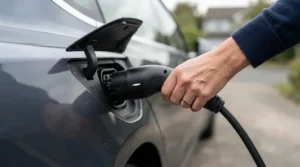
The Type 2 connector standard, formally IEC 62196-2 and often called the Mennekes connector after the German manufacturer that originally designed it, became the mandated standard for AC charging across the European Union from 2013 onwards, with the UK following the same approach post-Brexit. Its seven-pin layout does more than just carry power — it also handles the “handshake” communication between car and charger, confirming the connection is safe before current flows, and includes a physical locking pin so the connector can’t be pulled loose mid-charge.
Based on the spec comparison with older connector types, the Type 2 connector standard’s real advantage is interoperability: because virtually every charge point operator, wallbox manufacturer, and car brand builds to the same physical and communication specification, a Type 2 EV charging cable bought today should work at a home wallbox, a workplace charger, and a public AC point without any compatibility guesswork. The flattened top of the connector also makes it easy to tell apart at a glance from the rounder Type 1 and CHAdeMO alternatives you might occasionally still encounter on older or imported vehicles. What most buyers overlook is that this standardisation only covers AC charging — rapid and ultra-rapid DC charging uses the separate CCS2 connector, which is why many modern EVs have two charging ports built into one physical socket area.
How to Choose a Type 2 EV Charging Cable
Picking the right Type 2 EV charging cable comes down to matching a handful of specifications to how you’ll actually use it, rather than simply buying the cheapest or the most powerful option available.
- Confirm your car’s inlet type first. Check whether your vehicle has a seven-pin Type 2 socket or an older five-pin Type 1 one before buying anything, since a mismatched connector simply won’t fit.
- Match the current rating to your supply. A 32A cable makes sense for a dedicated wallbox, while a 16A cable may be sufficient — and cheaper — for lighter domestic use.
- Decide between single-phase and three-phase. Only choose a 22kW three-phase cable if your home or regular charging locations actually offer three-phase power, otherwise you’re paying for capacity you can’t use.
- Pick a length that suits your parking reality. A 5m cable suits most driveways with a nearby wallbox; a 7m-plus option earns its keep on awkward layouts or shared bays.
- Look for genuine certification marks. TUV, CE, or UKCA certification indicates independent safety testing rather than just a manufacturer’s claim.
- Check the connector’s build quality. A firm, positive locking click and a robust strain-relief boot at the cable ends reduce wear over years of daily plugging and unplugging.
- Consider whether you need an adapter too. Older Type 1 vehicles need a separate adaptor alongside any Type 2 EV charging cable to actually connect.
Cable Length/Current Rating: What Actually Matters
Two numbers dominate every Type 2 EV charging cable listing — length in metres and current in amps — and both get misunderstood in opposite directions. On cable length/current rating, the honest analytical take is that length is entirely about physical reach, while current rating is about charging speed, and confusing the two leads to buyers either overpaying for capacity they’ll never use or, worse, underbuying and being stuck unable to reach the socket.
On length: a 5-metre Type 2 EV charging cable comfortably handles most driveways where the wallbox sits close to the parking spot, but anyone dealing with an oddly positioned garage socket, a shared driveway, or public bays that don’t line up neatly with the charger should look at 7m or longer options like the CableDirect Type 2 EV Charging Cable reviewed above. On current: 16A delivers roughly 3.6kW on a single phase, 32A roughly doubles that to 7.4kW, and moving to three-phase 32A unlocks up to 22kW — but only if both your electricity supply and your car’s onboard charger can actually use it. Choosing the right charging cable means checking your car’s onboard charger spec sheet before assuming a higher-rated cable will automatically mean a faster charge; the car, not the cable, is very often the limiting factor.
EV Charging Adapter for Public Chargers: When You Need One
An EV charging adapter for public chargers becomes relevant in two fairly specific situations, and it’s worth being clear about which one applies to you before spending money. The first is the older-vehicle scenario covered by the Cord Type 2 to Type 1 EV Charging Adaptor above — a genuine physical mismatch between your car’s Type 1 inlet and the Type 2 connectors that now dominate UK public charging infrastructure. The second, less common scenario involves tethered public chargers with a fixed cable ending in a connector that doesn’t match your vehicle, which some older rapid units still present.
What most buyers overlook about any EV charging adapter for public chargers is that it should be treated as a compatibility fix, not a performance upgrade — reviewers consistently note that expecting an adapter to somehow boost charging speed beyond what the vehicle’s onboard charger supports is a common and avoidable disappointment. Based on the spec comparison of adaptors on the market, the practical advice is to buy one rated for at least 32A even if your car only draws less, since headroom reduces the risk of the adaptor becoming the weak link in the charging chain, and to favour models with built-in overheat protection given how much current briefly passes through such a small connector housing.
Public Charging Compatibility: Will This Cable Work at Every Charge Point?
Public charging compatibility is one of the more reassuring parts of owning a Type 2 EV charging cable in the UK today. The country’s public charging network has grown enormously — the UK’s public charging network passed well over 100,000 devices during 2026, and the overwhelming majority of AC points use untethered Type 2 sockets, meaning you bring your own cable rather than relying on a fixed one built into the charger.
That said, public charging compatibility isn’t entirely universal. Rapid and ultra-rapid DC chargers typically use tethered CCS2 cables built into the unit itself, so your Type 2 EV charging cable won’t be needed — or usable — at those particular chargers. Based on the spec comparison across charger types, the practical rule of thumb is: slower AC destination chargers (supermarkets, car parks, on-street points, workplaces) almost always need you to supply your own Type 2 to Type 2 cable, while motorway service stations and dedicated rapid hubs come with their own tethered DC leads. Carrying a decent Type 2 EV charging cable in the boot at all times, rather than assuming every charger will have one built in, remains the safest habit for UK drivers.
Practical Usage Guide: Setup, Storage & Maintenance
Getting the most out of a Type 2 EV charging cable is less about the cable itself and more about how you treat it day to day. On first use, always fully unwind the cable before charging — coiled cables can build up heat under sustained current, and manufacturers’ certification testing assumes the cable is laid out properly rather than left looped. Inspect the connector pins for debris or moisture before every plug-in; the seven-pin design tolerates light rain reasonably well, but a connector left face-down in a puddle overnight is asking for trouble.
Storage matters more than most new owners expect. A cable stored loose in a boot gets crushed under shopping, scuffed against tools, and gradually stressed at the connector-to-cable joint — the single most common failure point. Using the storage bag that comes with most Type 2 EV charging cable products, or investing in a dedicated storage box for a home wallbox setup, meaningfully extends cable life. In the first 30 days, the most common mistake new EV owners make is yanking the cable out by the cord rather than gripping the connector housing itself, which puts repeated strain exactly where the internal wiring is most vulnerable. A quick monthly visual check — looking for cracks in the outer sheath, discolouration near the connector, or a locking mechanism that no longer clicks firmly — catches wear before it becomes a safety issue.
Real-World Scenarios: Which Cable Suits Your Driving Life?
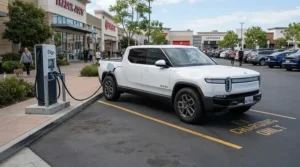
Consider a few genuinely different UK driving profiles to see how the right choice shifts. A commuter in a mid-sized flat with no driveway, relying entirely on public and workplace charging a few times a week, is generally best served by a compact, mid-length option like the Duosida Type 2 to Type 2 Cable — enough power to make use of a decent workplace point, without the bulk of a 7m three-phase cable that would rarely reach its full potential in that context.
A rural homeowner with a detached garage, a three-phase electricity supply already installed for other purposes, and a habit of long weekend trips is a much better match for the GONEO Type 2 to Type 2 Cable or the CableDirect Type 2 EV Charging Cable — the extra length and full 22kW headroom actually get used, both at home and at the increasingly common three-phase hubs found at motorway services and retail parks. Meanwhile, someone running an older, pre-2018 plug-in hybrid inherited from a previous owner, who’s discovered their Type 1 inlet doesn’t match the shiny new Type 2 EV charging cable everyone else recommends, needs the Cord Type 2 to Type 1 EV Charging Adaptor before anything else on this list becomes relevant at all.
Common Mistakes When Buying a Type 2 EV Charging Cable
The single most frequent mistake is buying based on the highest kW number available rather than what the car and home supply can actually deliver — a 22kW cable on a car with a 7kW onboard charger, or on a single-phase domestic supply, simply won’t charge any faster than a correctly matched 7.4kW cable, so the extra spend buys nothing but bragging rights. A close second is underestimating length requirements; measuring the distance from your intended charging point to your car’s charging inlet before ordering avoids the frustrating discovery that a 5m cable falls just short of an awkwardly positioned bay.
Skipping certification checks is another recurring pitfall — the market includes uncertified budget cables using thinner copper cores than their advertised rating suggests, which the honesty and integrity of good reviewing has to flag directly: cheap, uncertified cables genuinely do increase the risk of overheating and connector wear over time, so TUV, CE, or UKCA marks are worth treating as a minimum requirement rather than a nice-to-have. Finally, plenty of buyers forget that owning a car with a Type 1 inlet changes the entire buying equation, purchasing a standard Type 2 to Type 2 cable only to discover it doesn’t physically fit their vehicle at all.
Type 2 EV Charging Cable vs 3-Pin Domestic Charging: Which Should You Use?
A 3-pin domestic lead — the basic cable that plugs into any household socket — and a proper Type 2 EV charging cable solve genuinely different problems, and treating them as interchangeable is where a lot of new EV owners go wrong. The 3-pin route needs no additional hardware beyond what typically ships with the car, works anywhere there’s a standard socket, and costs nothing extra upfront. But it caps out at around 2.3-3kW, meaning an overnight charge might add only 20-30 miles of range, and sustained high-current draw through an ordinary domestic socket circuit — not designed for hours of continuous heavy load — carries a real, if modest, fire risk that manufacturers and electricians alike advise against for regular use.
| Factor | 3-Pin Domestic Lead | Type 2 EV Charging Cable |
|---|---|---|
| Typical power | 2.3-3kW | 3.7kW-22kW |
| Overnight range added | 20-30 miles | 60-180+ miles |
| Socket required | Standard household socket | Dedicated wallbox or Type 2 charge point |
| Recommended for daily use | Not advised | Yes |
The table above makes the trade-off fairly stark: a 3-pin lead is a genuine emergency option, while a proper Type 2 EV charging cable paired with a wallbox is what daily EV ownership in the UK is actually built around. Anyone charging more than occasionally should budget for a home wallbox installation and treat the 3-pin cable as the backup it was always meant to be, not the primary charging method.
Long-Term Cost & Maintenance
The upfront price of a Type 2 EV charging cable is only part of the real cost picture. A budget uncertified cable might save £30-£50 at checkout, but a compromised locking mechanism or thin copper core can shorten usable life dramatically, meaning a genuine possibility of replacement within a year or two rather than the five-plus years a well-made, certified cable should comfortably deliver. Factored over time, the cost-per-year of a quality cable like the Duosida Type 2 to Type 2 Cable or CableDirect Type 2 EV Charging Cable often works out lower than repeatedly replacing cheaper alternatives, even before accounting for the inconvenience of a cable failing mid-charge.
Maintenance costs, thankfully, are close to zero for a well-treated Type 2 EV charging cable — there are no consumable parts, no filters, nothing to service on a schedule. The main “cost” is simply care: storing it properly, avoiding driving over it, and replacing it promptly if the outer sheath cracks or the connector starts feeling loose. Total cost of ownership, in other words, is overwhelmingly determined by purchase quality upfront rather than any ongoing expense, which makes the certification and build-quality checks covered earlier in this guide a genuinely financial consideration, not just a safety one.
Safety, Regulations & Compliance Guide
UK public charging is governed by a specific set of consumer protections worth knowing about. The regulations themselves require operators of public charge points to offer contactless payment, display pricing transparently in pence per kilowatt-hour, and maintain reliability standards for rapid chargers — protections that apply to the charging infrastructure you’ll be plugging your Type 2 EV charging cable into, even though the cable itself sits outside that specific legislation.
For the cable itself, the relevant safety markers are CE (demonstrating compliance with EU safety directives, still widely used and recognised) and the newer UKCA mark for goods placed on the UK market. TUV certification, while not a UK-specific requirement, indicates independent German testing standards that many buyers treat as a meaningful quality signal. Practically speaking, a genuinely safe Type 2 EV charging cable will show visible certification marks on the cable or connector housing, come from a manufacturer with traceable contact details rather than an anonymous storefront, and include basic protections like IP44 or higher water resistance ratings for outdoor use. Avoiding unbranded, uncertified cables isn’t overcaution — it’s a straightforward way to sidestep the genuine overheating and connector-wear risks that cheap, undocumented electrical components can present.
Frequently Asked Questions
❓ What's the difference between a Type 2 EV charging cable and a Type 2 adapter?
❓ How long should my Type 2 EV charging cable be?
❓ Can I use a Type 2 EV charging cable at every public charger?
❓ Is a 32A Type 2 cable faster than a 16A one?
❓ Do I need a Type 2 to Type 1 adapter for my car?
Conclusion
Choosing a Type 2 EV charging cable isn’t a decision that deserves the five minutes most people give it. Get the power rating wrong and you’ll either overpay for capacity you can’t use or find yourself stuck with painfully slow charging. Get the length wrong and every single charge becomes a small logistical puzzle. Skip the certification checks and you’re gambling, in a small but real way, with an electrical component that regularly handles serious current.
Across the seven products covered here, there’s a genuine option for most UK driving situations: the Masterplug EV Charging Cable and RTSKY EV Charger Cable as sensible Mode 2 backups, the Duosida Type 2 to Type 2 Cable as a well-certified everyday wallbox companion, the GONEO Type 2 to Type 2 Cable, bokman Type 2 EV Charging Cable, and CableDirect Type 2 EV Charging Cable covering three-phase speed and reach at different price points, and the Cord Type 2 to Type 1 EV Charging Adaptor solving the specific compatibility gap that older vehicles present. Match the spec to how — and where — you actually charge, favour genuine certification over the cheapest listing, and a good Type 2 EV charging cable should quietly do its job for years without ever making you think about it again, which is really the whole point.
Recommended for You
- EV Charger for Octopus Intelligent Go: 7 Best Picks (2026)
- Tethered vs Untethered EV Charger: 7 Best UK Picks (2026)
- Best Home EV Charger UK: 7 Top Picks & OZEV Grants (2026)
Affiliate disclosure: this article contains affiliate links. As an Amazon Associate, we earn from qualifying purchases at no additional cost to you. Prices mentioned are approximate ranges at the time of research and may vary — always check current pricing on the retailer’s site before buying.
💬 Just one click — help others make better buying decisions too!😊
